Skip to content

Posts from the ‘Recipes’ Category

a dinner for lovers

Yesterday’s post explained why this is what’s for our Valentines dinner…it’s quick and easy to prepare, colorful, pretty, sensuous, light in the stomach, delicious in the mouth. Tomorrow morning I’ll lay out a schedule for how to get it from kitchen to table in under an hour. That will be easy as pie if you just spend maybe 10 or 15 minutes of light prep work the night before. (Tomorrow or Sunday will also bring another option for dessert.)

~ ~ ~

A reminder of the menu:

To whet (& wet) the Appetite:

Passion Fruit Cocktails for Two

Stacked Crab Bistro Salad with Cilantro Lime Vinaigrette

Dinner:

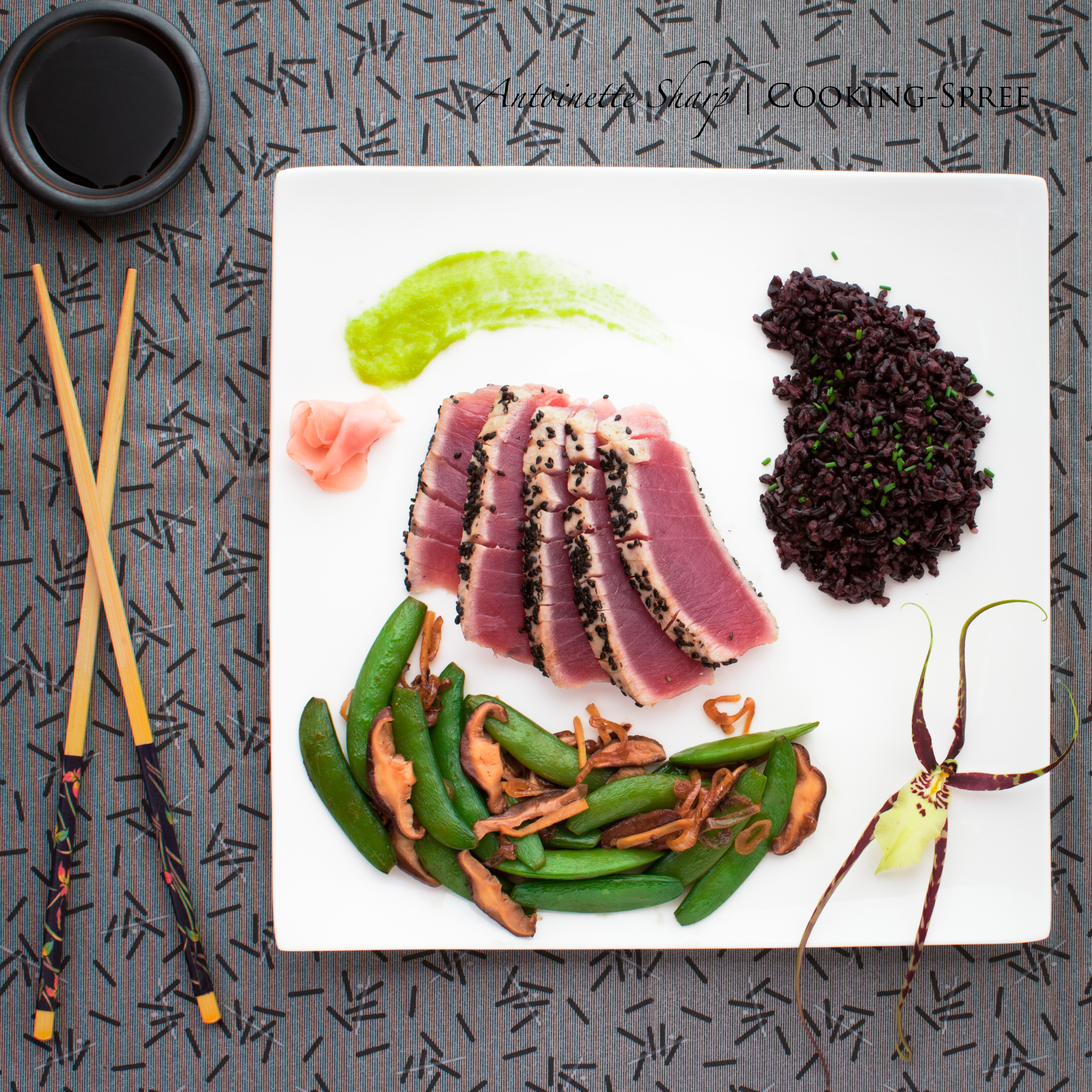
Seared Sesame-Encrusted Ahi Tuna

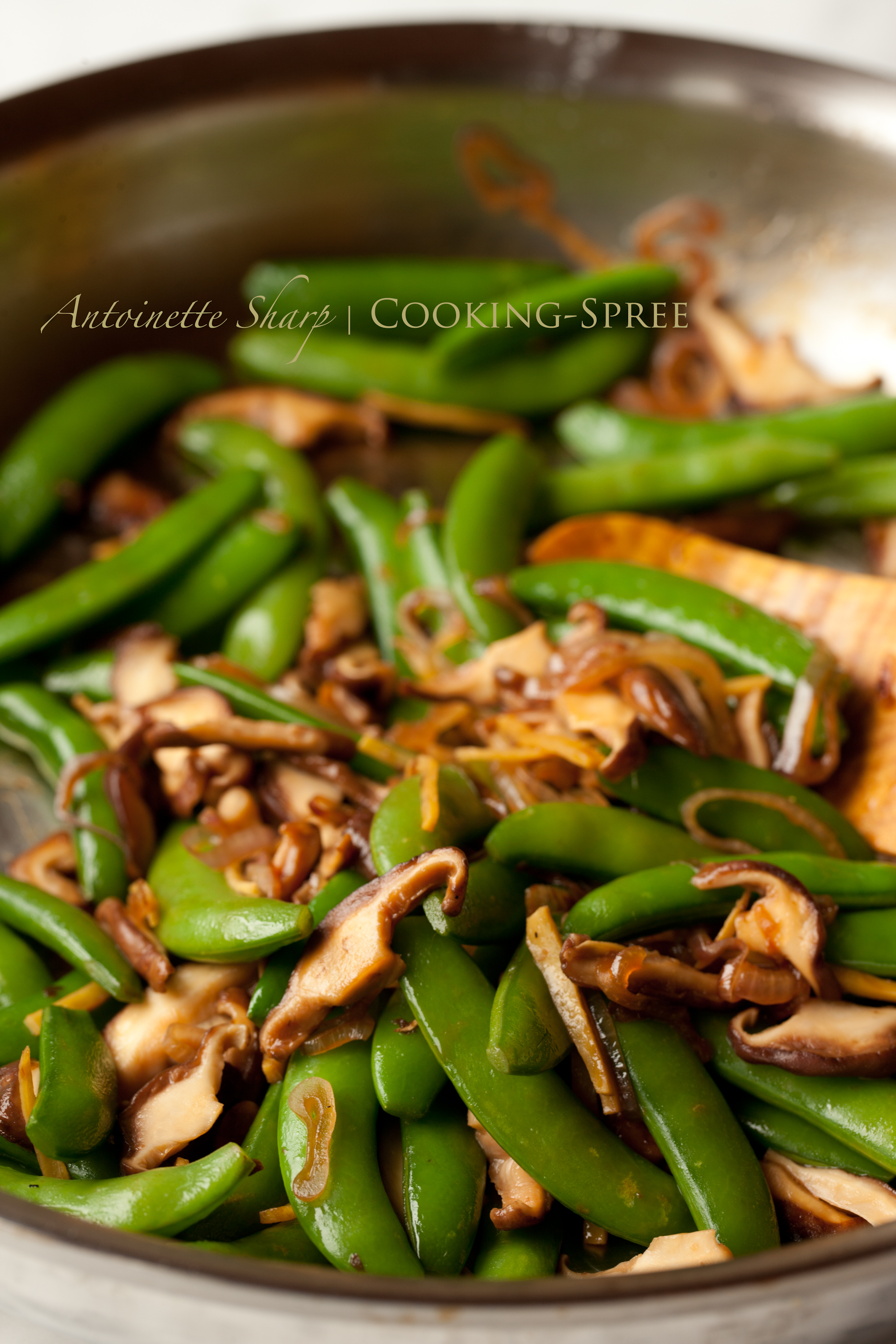
Sugar Snap Peas with Shiitake Mushrooms and Ginger

oh-so Forbidden Rice

Dessert:

a sweet multitude of options

~ ~ ~

A very little time spent prepping the vegetables the night before will make this dish a breeze.

Sugar Snap Peas with Shiitake Mushrooms and Ginger

  • ½ pound sugar snap peas
  • 1 teaspoon salt
  • 2 teaspoons sesame oil (I love toasted sesame oil for this, but not necessary)
  • 2 teaspoons canola oil
  • ¼ cup thinly sliced shallots
  • ¼ pound shiitake mushrooms, (stems removed & discarded) – sliced
  • 1 to 2 Tablespoons ginger, thinly sliced & sliced again into matchsticks
  • 1 Tablespoon + 1 teaspoon soy sauce or Tamari
  • 1 Tablespoon cooking sherry
  • 1 teaspoon unsalted butter

Wash the snap peas and remove their strings, if any. Put a pot on to boil, add salt. Have a colander in the sink and a bowl of ice-water close by. When the water comes to a boil, add peas. Cook for only 1½ to 2 minutes. (You want peas to be bright green and crispy, nearly tender.) Empty into colander. Transfer peas to bowl of ice water for one or two minutes to cool. Remove from water. Place in a clean kitchen towel, and roll and pat to dry. (At this point you can put them in a plastic bag and put in the refrigerator if you’re preparing ahead.) Otherwise set aside as you prepare the other ingredients.

Remove the stems from the mushrooms and slice fairly thinly. Cut the ginger into tiny “matchsticks”.  (Whether you opt for 1 or 2 tablespoons is entirely dependent on your love and tolerance of spicy warm ginger.) Thinly slice the shallots.

Heat the canola and sesame oils in a good-size skillet over medium heat. When oil is shimmering, add the shallots and, stirring constantly, cook for 1 to 2 minutes.

Add the ginger. Stirring constantly, cook about 30 seconds, then add mushrooms, and cook for 2 to 3 minutes longer. They’ll have begun to release some of their liquid and have started to sizzle. Raise heat to medium-high and add the peas. Stir occasionally, allowing peas to be touched by bits of brown. Add the soy sauce and cooking sherry, deglazing the pan of brown bits. (Taste for salt, adding a bit more soy if needed.) Add a pat of butter, stir to melt and glisten the peas and mushrooms. Serve.
Printer-friendly version of the sugar snap peas, click here.

~ ~ ~

Ever hear of forbidden rice? It’s the deepest darkest shade of purple – like aubergine. Royal purple. With all its brilliant color (phytochemicals) it’s rich in antioxidants. (The stuff that protects our cells from free-radical damage.) It’s a whole-grain, even more nutritious than its brown cousin, but cooks in only slightly more time than its white relative. (About 30 minutes.) I suppose it was chosen for this menu for obvious reasons. How can one not be a little tempted – at least intrigued – by what’s labeled forbidden? It got its name in ancient China when it was grown and harvested and fed to only the Emperor. Anyone caught with purple grains between his teeth was summarily executed. Well, perhaps I’m playing loose with the facts there, but it makes a rather dramatic story. And a great introduction for a side dish for lovers. (It’s not on every market’s shelf, but some of the better-stocked markets will carry it. It costs more of course, but it’s not prohibitive…a small bag will make enough rice to feed 8 to 10 and cost about $5.00.)

oh-so Forbidden Rice

(will serve 4)

  • 1 cup forbidden rice
  • 1¾ cups water
  • ½ teaspoon salt
  • 1 teaspoon butter
  • optional: 1 teaspoon chicken bouillon (I like Better than Bouillon – concentrated, natural good flavor)
  • chives, finely chopped

Bring water to boil, add salt, butter and bouillon (if using.) Add rice, stir, return to boil, then lower temperature to simmer. Cook on simmer for 30-35 minutes. (My simmer took 35.) Turn the heat off and allow pan to sit for 5 minutes or so before removing the lid. Fluff rice with a fork. Return the lid if not serving immediately. Before serving sprinkle with chopped chives.

Printer-friendly version of the rice, click here

~ ~ ~

Read more

passionate valentine martini

Let me preface the post by saying what you all already know. I am no mixologist. (If you’re looking for a man who knows his spirits, that would be Greg, affectionately known as Rufus. He and wife Katherine would welcome you with open arms if you’d like to pay them a visit.) And then there’s my blogging buddy Smidge  (who has a perfectly beautiful  blog!) – Smidge published a post today of a gorgeous blood orange martini. Completely out of my league,  I go barreling forward! I don’t know a lot about drinks, but I do know what my mouth likes, and my mouth loves this.

We have a favorite restaurant in Portland. Nuevo-Peruvian, Andinas.  They offer a sumptuous menu of foods you won’t find prepared quite like this anywhere, outside Peru;  theirs is a diverse menu, reflecting the diverse cuisine of a country that is on the sea, in the Andean mountains, and on the wide high planes. Andinas offers something for every appetite and every palate.  The walls there are  painted in russets, oranges, mahogany and deep purples;  hung from them are gorgeous photographs of Peruvians in brilliantly woven textiles, large hats, heart-splitting smiles! It’s noisy. It smells divine. Service is wonderful. And there’s this drink that I think I come close to dreaming about. It’s name is sacsayhuamán.  Shall I give you a minute while you try to pronounce it? Or shall I just tell you everyone calls it Sexy Woman, which comes awfully close.

Pureed Passion Fruit ~ Habañero-infused Vodka ~ Sugared Rim

I’m afraid that’s all I know about it…apart from the fact that it manages, like no drink I’ve ever had,  to be slightly sweet, slightly tart, a teeny bit  h o t, very cold and very sexy. Do you ever shudder with delight over the taste of something? (Please tell me I’m not alone in that!)  So it seemed right that I play with it a bit at home, tweak it just slightly to make it even prettier and just the thing to be sipped with your valentine.

Several years ago we went on a hunt for pureed passion fruit. I checked every local market before going on-line. We found several sources, but from what we could tell they all manage to be quite expensive. (That is, if you think $75 dollars is too much to pay for shipping!) But on a recent trip to a local market, I found the whole fresh passion fruits all snuggled up against the papayas and star fruits.  I picked up a slew of them and brought them home to ripen. They’re odd things…ripe when they turn from a beautiful smooth greenish-purple to a deeply wrinkled, dried-up (or so it seems) purple handball. These are on their way, but not yet ready.

When they’re ripe, you open them up and find it’s mostly seed in there, with a little pulp, but a perfume escapes that’s so floral and exquisite you want to slurp it on the spot, no spoon.

Scoop out the contents and push through a sieve, holes small enough to hold the seeds back, large enough to let the pulp and juices through. It’s worth working hard to get every delicious bit.

Then, the tweak, add the deep red of blood oranges and you’ll have most of what you need for a ~

Read more

where do you look for sunshine?

When rain in Seattle or Portland makes national news, you know things are about as bad as they get here. Standing water on freeways, drains unable to keep pace with the deluge,  stretches of highway closed, even a few small towns along rivers evacuated. We get grey days, and mostly gentle (and occasionally incessant) rain here, but not monsoons that turn umbrellas inside out and flood boots with the rain that falls fast down our jackets.  I was hydroplaning down the freeway about 10 miles an hour below speed limit, heading toward a long (and long-overdue) coffee date with a dear friend. Carolyn had been out of town for more than a month and I’d missed her. I was thinking of her sunny self as I tried to see through the waterfall that was my windshield. I was thinking too about where it is we go looking for sunshine when our eyes and skin are hungry for it.

Carolyn and I sat drinking our large steamy cups of chai, catching up with the parts of each other’s lives we’d missed. And then, from beneath the table she brought out a canvas banana with a zipper along one side. “Bananagrams,” she said. “You’re going to love it!” She spilled the tiles onto the table, and we turned them over, letters face-down,  as she explained how the game is played. Carolyn was right of course, my friend knows me. From here on out, along with my camera, Bananagrams go where I go.

~ ~ ~

Not long ago I’d visited a fellow-blogger  – Violets and Cardamom – and was struck by her pretty mango lassi.  It was lovely.

Today, I winged my own with several changes. Knowing the deliciousness of the pairing of mango, coconut, ginger, lime, cardamom and banana, it was a simple matter to drop them into a blender, whir them up, pour them out, and stick a straw into a glass of gleaming sunshine.

Read more

a simple post on a simple, luscious soup

dear readers, after the last two posts and all those   w o r d s   I must have bored you to teary yawns! Don’t think I don’t care about such things. I’m the first second to recognize you deserve a break!

So here, just one simple recipe, one photo and very few words from spree.

(I can’t launch into this recipe without first telling you –  I am so incorrigible! – that a recent study names beans as one of the top food categories implicated in promoting brain health into old age. The recommendation was for one to two servings per week (at a minimum.) Along with them,  the “super foods”. You know the ones.)

So, with very few words, may I simply offer you a bowl of luscious, comforting, healthful and delicious soup? Here, first…let me swirl my best olive oil on it. You deserve nothing less!

Chickpea Soup

4 servings

  • 2 cups (300 g) dried chickpeas
  • 1 medium onion, chopped
  • 1 garlic clove (or 2), chopped
  • 1 bay leaf
  • 1 fresh thyme sprig
  • a good pinch of cumin
  • a good pinch paprika
  • Chicken stock or vegetable stock (water is ok)
  • Salt & white pepper to taste
  • Your very finest olive oil (the one you’d serve the queen, or your future mother-in-law)

A day before, soak the beans in a large bowl. Fill with fresh cold water by several inches, and allow to sit overnight.

(I recently read – in Cook’s Illustrated – that if you add a ribbon of Kombu seaweed to your dried beans, you can actually do without the soaking, and it has a way of eliminating some of the side-effects as well as improving the texture of all beans cooked with it. I’ll try that next time. Too many words!) Read more

bread for tomorrow – the no-knead loaf

Did you know that ¼ teaspoon of yeast can rise a loaf’s-worth of dough just as well as a tablespoon? It’s true. It will simply take longer for it to do so. But there’s a real beauty in that. The old adage good things take time applies. With each extra hour the yeast grows, it adds incredibly to the flavor of the finished loaf. So, though some recipes for home-baked bread will have you adding nearly a tablespoon of yeast, and sugar for it to feast and grow quickly on, and have you rising the dough in a warm place, that’s meant for your convenience and to hurry the process. If you slow it down, you’ll love what happens!

This may be the easiest – and possibly one of the most delicious – breads you’ll ever bake. Start it today, finish it tomorrow, and there will be curtain calls and encores in your future! Do I exaggerate? Occasionally, I have, yes. But here, no.

For full-effect, a true Dutch oven is required f or this. Cast iron is best because it creates its own highly-conductive little furnace to bake the bread in. Higher-end brands like Le Creuset or Staub are lovely and come in many colors. But just as effective here are non-enameled (lidded) cast iron pots that you might see hanging over a campfire. The latter are inexpensive but require a bit more care in the cleaning, curing and preventing of rust. Always nice to have options though.

I’m sorry to repeat myself, but a digital kitchen scale makes this process so much simpler too, and with fewer things to clean up after. (See preceding posts if you haven’t already.)

This method (ingenious really) was first developed and introduced to us several years back by Jim Lahey of Sullivan Street Bakery in New York City. Since its introduction, this No-Knead method has rather revolutionized home bread-baking. Without terrifically expensive ovens (the kind of which are almost never seen in home kitchens), this bread’s crust wasn’t reproducible at home before. You can see for yourself though, loaves reminiscent of old-world bakeries can now emerge steamy and fragrant from our own rather ordinary ovens.The secret lies in the steam that’s created and contained within the Dutch oven as the bread bakes.

This bread will cost you the equivalent of 3 cups of good-quality flour. We won’t calculate the cost of ¼ teaspoon of yeast or a spoon of salt. Let’s just say this gorgeous bread costs less than a cup of coffee or tea (even a very bad cup.)

Let’s get started.

No-Knead “Artisan” Bread

and you are the artist!

  • 3 ¹⁄3 cups (430 g) flour (either all-purpose or bread flour)
  • ¼ teaspoon instant or active dry yeast
  • 2 teaspoon salt
  • 1½ cups  + 2 T (390 mL) water
  • Extra flour, wheat bran, fine cornmeal, as needed for dusting

a NOTE on the weight measurements, this primarily for the readers in the States who are as yet not as familiar as we will one day be with metrics. One beautiful thing about the metric system is that grams and mL’s are virtually interchangeable. In other words 100 mL’s of liquid will weigh 100 grams. Don’t you love that? That makes it possible to weigh out water measurements instead of the more approximate method of filling a glass measure where “a tad above-the line, below the line, eye-level” all makes a difference. Weighing is exact, every time.  (If you have a scale, it will likely convert US measurements to metric with a button-push, but just fyi 430 grams =  15.2 ounces.)

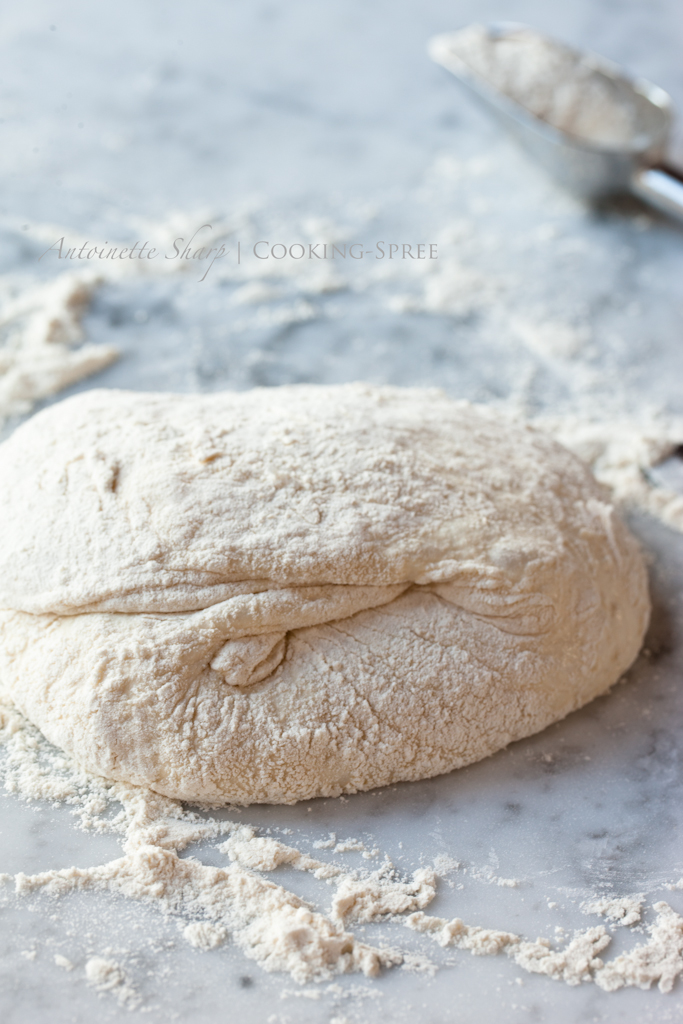
In a bowl, mix the flour, yeast and salt. Stir in the water to blend. If using a scale, place bowl on scale and zero it out. Add 430 grams flour. Add yeast and measure out salt. Zero the scale, and add 390 mL (or grams) of water. Mix loosely. (It will finish the process of blending as it sits.) What you’ll have will be a bit wet, shaggy and messy-looking. Cover bowl with a tea towel and allow to rest (and grow!) for 12 to 24 hours. (If you choose a cooler place, the process will likely take 18 to 24 hours. Room temperature, more like 12 hours.) When the dough is dotted with bubbles and very alive-looking, you’re ready for the next step.

Only 1/4 teaspoon yeast…amazing right?

Generously flour a work surface. Dump the contents of the bowl out onto it.

See all the strands of gluten that have formed while you’ve ignored your dough? This is what will create pockets to contain the gas.

No need to knead, but simply fold the dough over on itself several times. Cover it with a clean towel and allow it to rest for 15 minutes. (Dough that rests like this is much more workable.)

(This next step feels so good!) Using only as much flour as needed to prevent the dough from sticking to your fingers, shape the dough as follows:

Fold in thirds (as if you were folding a letter for an envelope, one fold, then another.) Rotate the loaf, then fold each longer end in again. (You’ve made roughly a square shape with rounded corners.) What you have facing you is the seam that will open later, upon the final rise in the oven. 

After the first two folds

After the last two folds. Ready to rise.

Lie another towel on your counter and cover with a generous amount of flour, wheat bran or fine cornmeal and then place the dough on it, seam-side down. Be sure the flour extends beyond the borders of the bread as it will be growing. The reason for the generous amount of flour is that you do NOT want the bread sticking to the towel when you go to invert it into a hot Dutch oven.  Dust the dough with a little more flour then cover with a tea towel and allow to rise about 2 hours. In these two hours the bread will have more than doubled its size.  Read more

bread for today

It’s no secret: you can plunk down a lot of good money on a loaf of good bread. A loaf that actually tastes like bread, with honest texture and chew, with a browned crust that crackles when you tear or bite into it and little bits of it spill onto your lap. A loaf with a labyrinth of airy holes inside (to better hold the butter or olive oil), and an aroma that you want to bury your nose in. A loaf like that will set you back at least a several dollars.

Or – easy-as-pie (only easier) – you can make your own. In a recent post I listed bread from your oven as a remedy for the doldrums. It’s certainly that – but it’s not only the eating of it that lifts your spirits – it’s the feel of it, all squishy at first and then soft and powdery like a baby’s bottom. It’s the heavenly aroma that leaks from your oven and drifts through your house. And it’s the sheer miraculousness of motionless ingredients springing to life! Baking bread is simply one of life’s simple pleasures. Eating it is another.

In my previous post (on a grand scale) I laid out reasons why a digital kitchen scale belongs in your kitchen. For bread-making (as I’m about to describe) the process is made nearly fool-proof. You’ll get consistently wonderful results, loaf after steamy loaf. (The weight of “carefully” measured and leveled cups of flour can vary by as much as 2 ounces!)

The first of these two recipes will give you bread today. The second, using less yeast and undergoing a longer, taste-developing rise, can start today but will finish tomorrow. They’re both delicious, and I make each of them all the time. The second, if you can wait, is a-maz-ing! Both take very little hands-on time, the longer method even less hands-on time, so don’t be deterred by the waiting game. While the dough is doing its growing thing, you can be tending to whatever else calls you.

Almost always these days, I’ll bake bread using a Dutch oven. With its lid on, a moist mini-environment is created, one very similar to professional deck-ovens with steam-injection. The crust that results is phenomenal. I’ll give the instructions for with and without a Dutch oven. 

Basic Bread Dough

  • 20 ounces bread flour (4 cups)
  • 12 ounces water (1½ cups)
  • 2 teaspoons salt
  • 1 teaspoon active or instant yeast (I prefer active)

Instructions using a digital scale:

Turn scale on. If using a stand mixer to knead your bread, place its bowl on the scale and then zero the scale out. (The weight of the bowl will no longer be counted.) Begin scooping flour into the bowl until it measures 20 ounces. Measure in 2 teaspoon salt. Again, zero out the scale. Add lukewarm water until scale registers 12 ounces. Spoon 1 teaspoon yeast over the top and allow to dissolve in the water.

No scale yet? 

Measure the ingredients into your bowl by cup and spoon. (Never use a two-cup measuring cup to measure flour. The results are much more compact and will therefore weigh more than intended.)

Fit the bowl onto your mixer and using the paddle attachment, incorporate the ingredients fully. Remove paddle and replace with the dough hook. Knead until the dough is smooth and elastic. This will take about 10 minutes.

(When ready you should be able to remove a small piece of the dough and stretch between your fingers and it will stretch into a translucent sheet without breaking. If it quickly breaks, continue kneading. Another test is simply to use a couple knuckles to press the dough. If it springs back and completely fills the depression, it should be ready.)

Remove the bowl from the mixer, cover it with plastic and allow it to rise to about twice its size.

Now the test for readiness is to gently push a finger into the dough. The dough should offer some resistance. If it springs back rapidly, let it rest a bit longer. If you let it rise too long, the dough will turn a bit flabby and will be a bit more reluctant to give that extra rise once in the oven.)

Turn the dough out from its bowl onto a floured surface and knead it to expel excess gas and redistribute the yeast.

Forming the loaf:     Cover with a dish towel and let rest for 15 minutes. To form a boule (ball-shaped) loaf, simply roll the dough back and forth on the cutting board or counter following a circular motion until smooth and round. Again, cover the dough with a dish towel and allow to rise for another hour. If using a Dutch oven, you can place the boule in the pot and allow it to rise there. (But please refer to the Dutch oven method below before proceeding.) If using a traditional (no Dutch oven method) place the formed ball onto a baking sheet.

Traditional method (no Dutch oven)      After about 30 minutes of bread-rising –  Preheat the oven to 450°F.

(Yes, it’s early but the oven gets better, with a more even heat, if allowed to preheat for a longer period.) If you want to create some steam to produce a better crust you can place a cast iron skillet in the oven on a lower rack when you begin to preheat. Then add a cup of water to the skillet (using mitts to avoid burning!) when you put your bread in to bake.

Just before sliding your bread into the oven, slice an X or a pound symbol # into the top to help it expand for its final (rather dramatic) rise. Coat with olive oil and a sprinkling of coarse salt. Place into oven on baking sheet and bake for 10 minutes at 450°F then reduce oven temperature to 375°F and continue baking until done, 45 to 50 minutes. (Internal temperature when done, 200°F to 210°F.) Cool on a rack completely before cutting (if at all possible.)

Dutch oven method:  (5½- or 7½-quart Dutch ovens will work – best results with cast iron)

Don’t let this confuse you, but you have yet another option here. Either a pre-heated Dutch oven – the advantage will be a crunchier crust and a bit more rustic appearance, or a cold Dutch oven – the advantage being that you can allow your loaf to rise in the pan, preserving the pretty shape you’ve created. You might try them both and see which you like better. It’s slightly less “intimidating” if you start with the cold Dutch oven the first time. So I’ll begin there.

Cold Dutch Oven: After forming your boule (description above) place in the Dutch oven, the bottom of which has been oiled first. Allow to rise until doubled, then add a coating of olive oil and some coarse salt, and slash the top as directed above. Place the lid on the pot and bake for ½-hour. Remove the lid and continue baking until done. (The internal temperature will register 200°F to 210°F) another 15 to 30 minutes. Remove and cool on rack. The crust will make the most delicious-sounding crackle as it cools. (The loaf pictured here was prepared in a cold Dutch oven.)

Read more

preserved lemons

When winter hits, full force, my foodie mind turns to sunny foods. Bowls and platters of brilliant fruits (and vegetables) plucked straight from a Gauguin painting. Perfume-y spices from Morocco and India. And flowers, bright boisterous flowers dropping sunny pollen on the table.

Because that’s what my mind turns to, you’ll be seeing quite a few sun-drenched recipes here for the next couple months. Foods from Morocco, Spain, India, Provence, Italy, and  some island nations. I’m no authority on any of those cuisines – I simply know how I choose to cook, and how I love to eat, and I can’t resist the sharing when I stumble upon something wonderful.

A number of dishes will call for preserved lemon. For those of you unfamiliar, here’s what some chefs had to say about this well-loved and versatile condiment (also referred to as lemon confit):

 “…salt-preserved lemons have a strange and delectable flavor that utterly mystifies.”  [Nancy Harmon Jenkins, The Mediterranean Cookbook]

“…refreshing, tangy, essential to the cooking of tagines…well worth making your own….Be as liberal as you like, tossing them in salads and scattering them over your favorite tagines.” – [meat or vegetables stews] [that from Ghillie Basan, author of Tagine – Spicy stews from Morocco  and Flavors of Morocco]

Laura Calder, author of French Taste and delightful host of her own show on the Cooking Channel says:  “I don’t make tagines that often, so I have started flinging the lemons into other dishes… [Doesn’t that remind you a bit of Julia Child?] …Diced preserved lemon (and it’s actually the skin of the lemon you eat, not the flesh) is great with fish fried in butter or thrown in with nice fat chops to make a slightly exotic supper in a pan; it also perks up vegetable dishes.”

And here’s what Dorie Greenspan, author of the glorious cookbook, Around my French Table, has to say: “…soft…sharp…salty flavor…good with chicken and with meaty fish, like tuna and swordfish, they’re also wonderful with bitter greens and even beets.” 

Chef Eric Ripert of New York City’s famed Le Bernardin restaurant – “I add lemon confit to so many dishes—from broiled fish to pork and beans.”  He blends his lemon confit with butter to add a pleasantly pungent flavor to broiled fish. Before broiling, he’ll dot the fish with some of the lemon butter, then serve with more of it on the side.

~ ~ ~

You can of course find jarred preserved lemons already made – in some better-stocked grocery stores, gourmet shops or in Moroccan food markets. It’s very simple to make your own though, and inexpensive. Plus it kind of satisfies some pioneering itch inside, keeping your eye on that jar of lemons as they soften and mellow and transform themselves for your table. If you’re making your own, it does take about a month for them to fully “mature” – but they’ll last for perhaps a year in your refrigerator once done.

Preserved Lemons – or Lemon Confit

NOTE on the lemons: Because it’s only the rind you’ll be eating, it’s important (I think) to start with organic lemons.

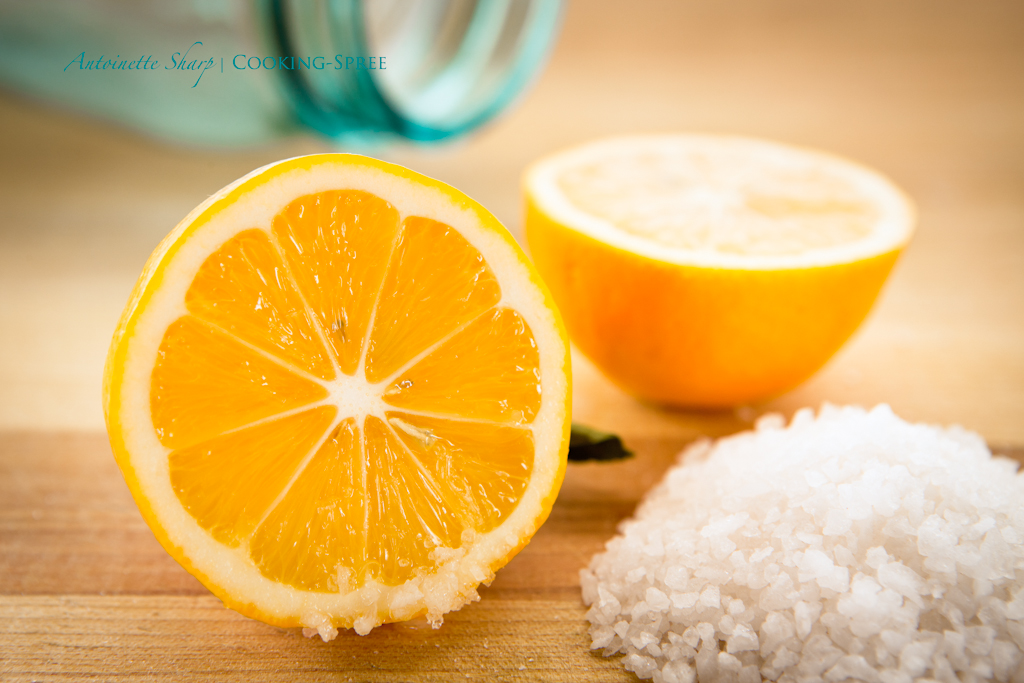
  • 10 organic, unwaxed lemons (I prefer the smaller, thin-skinned, juicy and sweet Meyer variety)
  • 10 Tablespoons sea salt
  • the juice of 3 to 4 lemons, though possibly more (this juice doesn’t get used until day 3 or 4)


  • OPTIONAL: I like to add to each jar 1 or 2 bay leaves, several allspice berries, and 5 or six pink (or several black) peppercorns.

Wash (and then dry) your lemons and sterilize a quart-sized jar and lid.

(You have options on how to cut the lemons. Cutting in half cross-wise, or making longitudinal cuts from the top to about ¾ of the way to the bottom. I now prefer the latter way, so I’ll give instructions accordingly, though the photo below doesn’t agree.)

Cut the stem end and tips off of each lemon, top and bottom, avoid cutting into the lemon’s flesh. Standing the lemon on its bottom edge, slice from the top  ¾ of the way down, as if you were going to cut into quarters, but leaving the base intact. Read more

smokin’ hoppin’ john

From down south in New Orleans there comes a Cajun dish of black-eyed peas and rice, traditionally served on New Year’s Day. Hoppin’ John they call it. Eaten on the first day of the new year, it’s purported to bring good luck for the remainder. I figure when something tastes this good, it’s bound to be lucky! Most often made with ham and bones, this is a vegetarian version – don’t be dissuaded you meat-eaters – it’s brimming with smoky flavor from smoked paprika and chipotle peppers in adobo sauce.  (Now you see where the smokin‘ comes from.)

If you use frozen black-eyed peas and white rice, you could assemble this in well under an hour. And is it ever affordable! (With money saved….here I go with the pitch again…you could donate to a local food bank or shelter and help another eat well. That just may be doubly lucky.)

Smokin’ Hoppin’ John

makes 4 very generous servings

  • 2 Tablespoons vegetable or olive oil
  • 1 medium onion, coarsely chopped
  • 2 cloves garlic, minced
  • 1 cup uncooked medium- or long- grain rice (brown or white)
  • ½ teaspoon smoked paprika
  • 1½ cups dried black-eyed peas, soaked overnight, cooked and drained – or use a 20 oz. bag of frozen black-eyed peas for immediate use (see NOTE)
  • 2 – 3 cups vegetable both (or, if you prefer, chicken broth)
  • 1/4 cup beer
  • 1 chipotle chile in adobo sauce, minced
  • 1 t. salt

Optional Garnishes:

  • chopped green onions
  • grape tomatoes, cut in half
  • chopped fresh parsley
  • shredded cheddar
  • hot sauce (especially Cholula chipotle-style)

Soak black-eyed peas overnight.  Cover with water to level 2 inches above beans.  Gently simmer until done.  Drain and set aside. (If using frozen beans, simply proceed to the next step.)

NOTE: on the black-eyed peas. I have a preference for beans I cook myself. They hold together better, have just the perfect “doneness” and I think a bit more flavor. HOWEVER, frozen black-eyed peas make a totally acceptable alternative to cooking the long way and I wouldn’t hesitate to go that route if at all pressed for time.

Over medium heat, warm the oil in a large saucepan or heavy-bottomed pot.  Add the onion and cook until the onion is softened and sweaty, about 5 minutes.

Add the garlic and rice and stir well.  Allow rice to toast for 1 minute.  Add the smoked paprika and 1 teaspoon salt and stir to coat the mixture well. Read more

German apple pancake

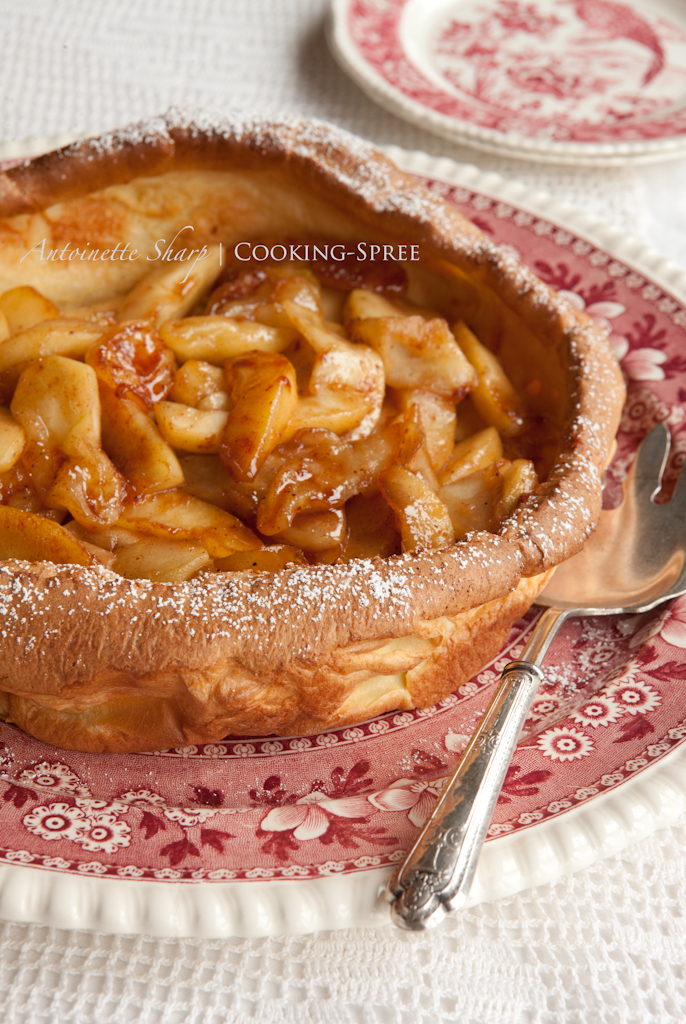
No food tradition in our family is longer-lived than the German apple pancake. So central a family holiday tradition, so beloved, for years it even served as the “secret password” between my daughters and me. We never needed to use it, but it was comforting knowing it was there. ; )

Every Christmas morning for our children’s lives our house would fill with the sweet perfume of cinnamon and nutmeg and caramelizing apples. Every Christmas morning, the girls’ eyes, and later on, the boy’s, would pop at the big puff of a pancake as it came from the oven. (It’s a bit of a wonderment really.) From the oven, I’d slip it onto a warm platter and then –  into the golden heart of it a steaming skillet-ful of glistening caramelized apples would tumble. I think it’s become impossible for any of us now to separate Christmas morning from the pancake.

As true as that is, we enjoy this special breakfast too much to relegate it to one morning a year. It manages to show up at birthday breakfast tables by request, and occasionally it appears just because  someone’s in need of a little extra lovin’ or an atta-boy or -girl! This year we’ll bring it the New Year’s table too. It’s how our family celebrates with breakfast.

So disappointed I forgot to include the cranberries for this one – it’s positively beautiful with them.

German Apple Pancake

serves 6 to 8 

the pancake:

  • 3 large eggs
  • ¾ cup milk
  • ¾ cup all purpose flour (3¾ oz. – 105 g.)
  • 1 teaspoon vanilla extract
  • ½ teaspoon salt
  • 1 teaspoon granulated sugar
  • 1½ Tablespoons butter

the apples:

  • 1½ pounds apples (up to 2 pounds will work) – Granny Smith are a good choice
  • ¼ cup melted butter
  • ¼ cup light brown sugar
  • ½ teaspoon ground cinnamon
  • ½ teaspoon ground nutmeg (either new or freshly grated is best)
  • ½ cranberries (optional)

the sprinkling of snow:

  • powdered sugar

Place an oven rack in the middle position. Preheat the oven to 500°F.

Into a blender (or food processor) break 3 eggs. Add milk and vanilla, and process for about 30 seconds. Add the flour, salt and sugar and process until lumps are gone, about 15 seconds. (Don’t overmix.) Allow to “bloom” – for flour to absorb the liquids completely – at least 15 minutes, and as long as overnight. Briefly mix again before pouring in the pan.

With oven at 500°F, melt 1½ Tablespoons butter in a heavy skillet over medium heat- cast iron works very well for this. When the butter has turned to foam, swirl it around the bottom of the pan, and slightly up the sides. Pour in the pancake batter and place the pan in the oven. Promptly lower the heat to 425°F. Cook for 10 minutes at this setting, and then lower the heat to 350°F and cook for about 15 minutes longer. (If during the initial stages of the baking, the center of the pancakes bubbles up and forms a little mountain, pierce it with a long handled fork. No worries if it doesn’t completely flatten though because the apples will take care of most of that.) Like magic, the sides of the pancake will rise up and form a bowl.  Read more

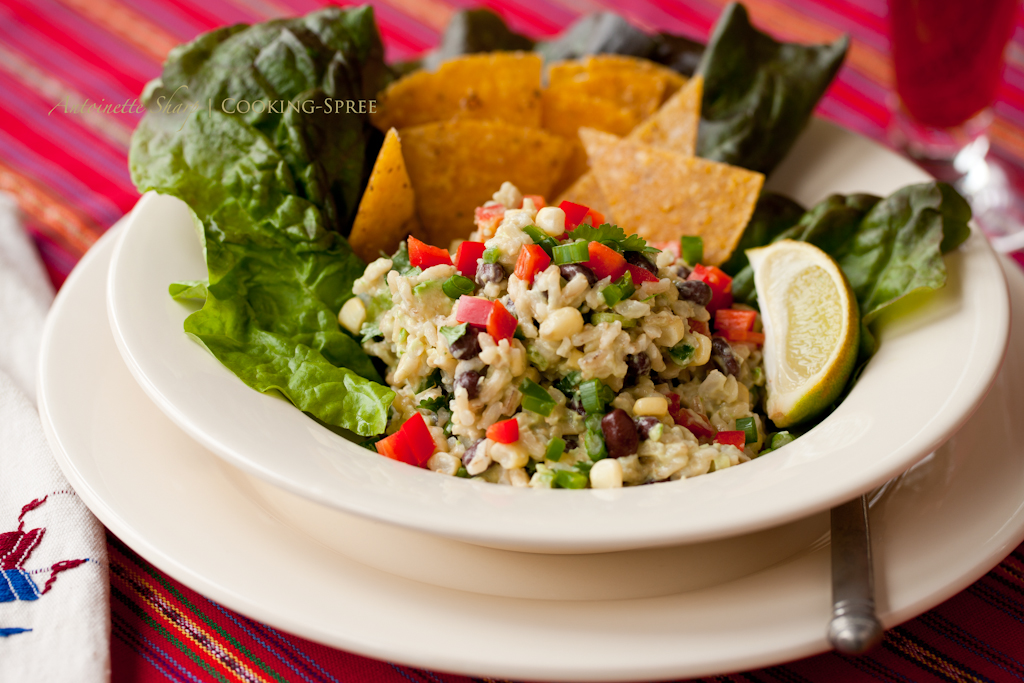
Fiesta Rice & Black Bean Salad

We pick up the series on Rice & Beans with Installment #6. (The series offers one idea on how we can help feed the hungry. If you’d like background, please see the NOTE at the bottom of this post.)

You know how in the dead of winter, when your bones are cold and your lips are chapped and you’re wearing your socks to bed, you long for something warm in your belly? Soups, stews, chilies, or maybe for you it’s a hearty roast and potatoes.

Does it ever happen for you in the dead of winter when your bones are cold that you long instead for something that smacks of warm summer days, open windows, t-shirts and flip flops?  Something on your plate that reminds you there IS a sun, and it’s on its way around again. Sometimes we just need a reminder that winter doesn’t last forever. And if you’re in need of such a reminder, and wanting the feel and taste of summer in your mouth again, this may be just what you’re in need of. I’ve posted lots of soups and stews in this series. Time to shake it up a bit. Time for a party of a salad.

This is a meal easily put together. The ingredients can be picked up at just about any market, any time of year. Not a thing to cook but rice. Open a can of beans and a bag of frozen corn, do a little chopping & tossing. Whir up a little dressing. There’s no meat, but plenty of lean protein from the rice and beans. With its tasty guacamole dressing, its a fresh sort of delicious. It’s light-tasting but satisfyingly filling. It’s a bite from a place where the sun always shines.

Fiesta Rice & Black Bean Salad

salad ingredients

  • 1 cup uncooked rice (your choice of white or brown)
  • 1 – 15 ounce can black beans, rinsed and drained
  • 1 cup thawed frozen corn
  • 1 medium red bell pepper, chopped
  • 8 green onions sliced
  • ¼ cup plus cilantro
  • 2 large or 3 medium jalapeño peppers, seeded, de-ribbed, and minced

the dressing

  • 1 large clove garlic
  • 2 ripe avocados
  • ¼ cup plain yogurt
  • 4 green onions roughly chopped
  • 2 Tablespoons chopped cilantro
  • 1 Tablespoon (to 2) fresh lemon juice
  • ¾ teaspoon salt
  • ¾ teaspoon ground cumin
  • ¼ teaspoon ground pepper

To serve:

  • leaf lettuce
  • tortilla chips
  • wedges of lime

Cook the rice and allow to come to room temperature. Add the black beans, corn, about ¾ of the chopped red pepper, 8 green onions sliced, ¼ cup chopped cilantro and the diced  jalapeños. Season with salt and pepper. Toss together and chill.

Prepare the dressing:

Into the jar of a blender put the minced garlic, 1 avocado in chunks, the remaining 4 green onions coarsely chopped, the yogurt, remaining 2 Tablespoons cilantro, lemon juice, salt, pepper and cumin. Process until smooth. Taste for salt and lemon, adding more as necessary.

Toss the rice and beans with the dressing and chill. Before serving cut the avocado in ¾-inch pieces and gently toss together with the rest of the salad. Place lettuce leaves on plates or large salad bowls, top with fiesta salad, scatter the last bit of red pepper over top and serve with tortilla chips and wedges of lime.

~ ~ ~

Read more