Skip to content

Posts tagged ‘recipe’

pumpkin chiffon pie

I know you show up here mostly because you like food and because you expect that I’ll talk about food. You don’t come to hear my confessions. Yet several times in recent months I’ve subjected you to them. I sincerely apologize, I do, but I guess I’m not quite done, because here comes another: I have had a lifelong Fear of Pie. Well, it’s not the pie I fear, because that would be silly. Pie, especially fruit pie, is my favorite dessert. It’s the making of pie I’ve feared. You can trust me with the innards of any pie, I think, but the crust? I cringe. My hands go cold and clammy. My mouth goes dry.

I’ve lived with this phobia my entire adult life. I’ve spoken of it here before, and eating a bit of humble pie, I offered a compromise, a more rustic version of pie, the galette. But I’d vowed this year to meet pie head on.

For a very special girl’s 9th birthday, my gift was a series of baking dates together. Sici and I laid them all out, from most basic to — you guessed it — most feared. Kids, as you’ve no doubt experienced, are far more perceptive than we sometimes pretend, and they’re quite adept at picking up our true feelings no matter what words we speak. Point is, I think she knows. I swear, hand on heart, I’ve so not wanted to contaminate another generation with pie fear! But this girl wasn’t about to be contaminated or deterred. She’s a trooper, an adventurer, a girl with a can-do attitude, and I’m taking a lesson from her on this one! With our pie date looming, it was time I practiced.

You’re right, of course. Why would you take a lesson from me on pie crust? Why read another word? You’ve got a point. But here’s my thinking: I’ve been doing quite a bit of research on the subject. A number of sources claim they hold the secret for the perfect pie dough, and I’m not saying they don’t,  but I’ve remained unconvinced.

If you’ve ever read Cook’s Illustrated, you know that they’re renowned for making hundreds of versions of a recipe in their test kitchens in order to arrive at “perfection.” They’ll lay out a case, sometimes quite scientific, and in this instance, I was looking for science — hard scientific evidence, something to bring me back to the Age of Reason. I won’t lay it all out here, because I actually do have a life apart from this and you do too – but if you’re interested, you may be able to  locate a copy of the article Foolproof Pie Dough, published September, 2010.  I’ll give you the recipe here, but the case they made is brilliant and the article very interesting if you’re so inclined.

In brief, the secrets are three:

  1. the fats – mostly butter, and a little vegetable shortening (which I’ve tried my whole life to avoid, but finally succumbed because, for a great cause, we make sacrifices)
  2. the flour – 1½ cups blended very well with the fat, another cup pulsed in ever-so quickly afterwards
  3. the liquid – half ice water, half Vodka (the vodka burns off completely in the baking, leaving no trace of alcohol and no tell-tale taste. Vodka inhibits some of the gluten-formation that occurs when using water alone, thereby ensuring incredible tenderness!)

I summoned my inner-Sici and made the pie dough yesterday. It wasn’t picture-perfect, but everything else about it was. It was flaky, tender, flavorful. I did it! I’m still basking in euphoria.

the crust – Foolproof Pie Dough

(for one 9-inch double-crust pie)

  • 2½ cups (12½ ounces) unbleached all-purpose flour
  • 1 teaspoon table salt
  • 2 Tablespoons sugar
  • 12 Tablespoons (1½ sticks) cold unsalted butter, cut into ¼-inch slices)
  • ½ cup cold vegetable shortening, cut into 4 pieces
  • ¼ cup cold vodka
  • ¼ cup cold water

1. Process 1½ cups of flour (7½ ounces), the salt and sugar in food processor until combined, two one-second pulses. Add butter and shortening all at once and process until homogenous dough just starts to collect in uneven clumps, about 15 seconds. (All the flour will be coated and the texture will resemble cottage cheese. Some very small pieces of butter will remain.) Scrape the bowl with a plastic scraper, evenly distributing the mixture around the blade. Add the remaining cup (5 ounces) of flour and pulse until the mixture is evenly distributed around the blade and the mass of dough is broken up, 4 to 6 quick pulses. Empty the mixture into an empty bowl.
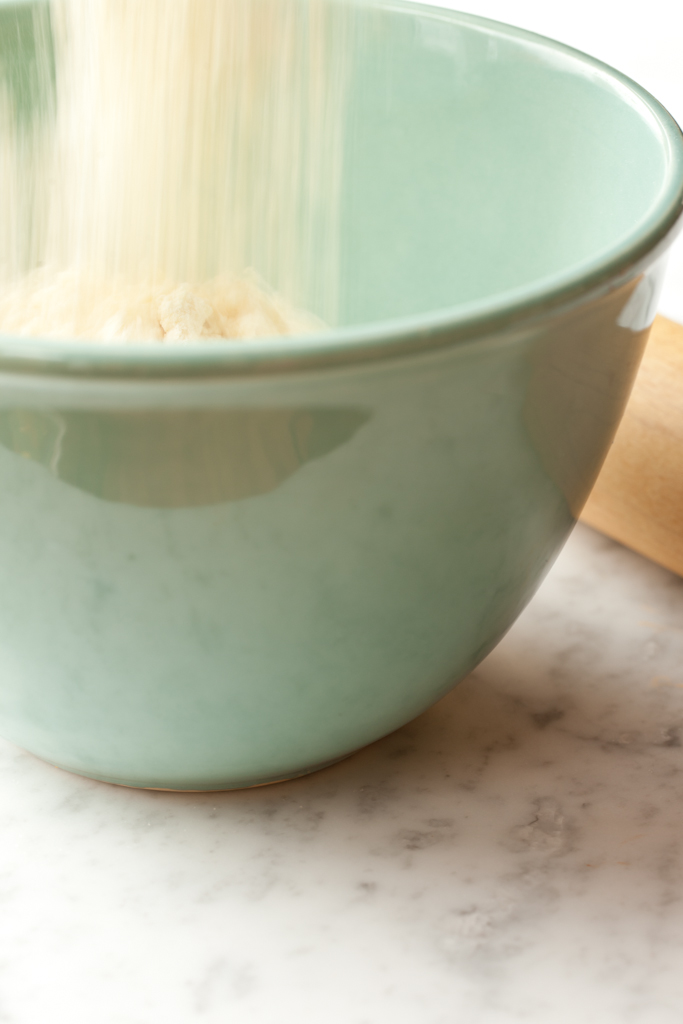
2. Sprinkle vodka and water over the mixture. With a rubber spatula, use a folding motion to incorporate the liquid, then press down on the dough until it’s slightly tacky and adheres together. Divide the dough into two equal portions, roll into balls and then flatten each into a 4-inch disk. Wrap in plastic wrap and refrigerate for at least 45 minutes, or up to 2 days. (Dough may also be frozen, then thawed for later use.)

3. Adjust the oven rack to the lowest position and place a rimmed baking sheet on the rack. Preheat the oven to 400°F.

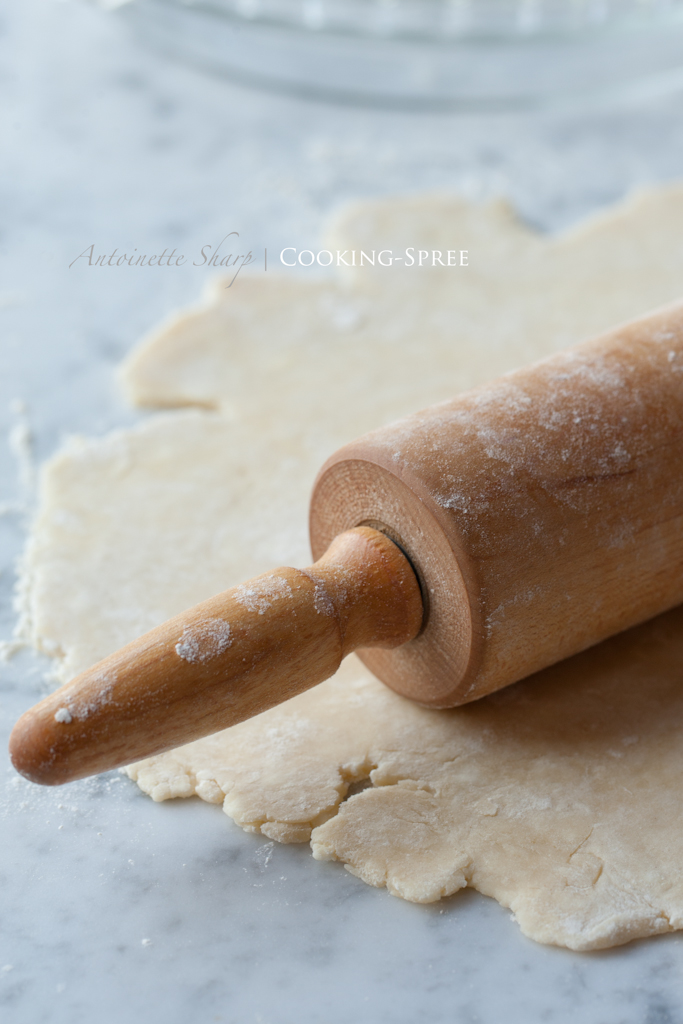
Remove the dough from the refrigerator and roll out on a generously floured board (using up to ¼ cup of flour as needed) into a 12-inch circle about one-eighth of an inch thick. Roll the dough loosely around the rolling pin and unroll into the 9-inch pie plate, leaving at least 1-inch overhang all around. Working around the circumference, ease the dough into the pie plate by gently lifting the edge of the dough with one hand while pressing into plate bottom with the other hand. Refrigerate for 15 minutes.
4. Trim the overhang to ½ inch beyond the lip of the pie plate. Fold the overhang over on itself, with the folded edge even with the edge of the pie plate. Using thumb and forefinger, flute the edge of the dough. Refrigerate dough-lined plate until firm, about another 15 minutes.

5. Remove from the refrigerator and line the crust with foil. Fill with pie weights, or pennies. (This keeps the crust from shrinking.) Bake on the rimmed cookie sheet for 15 minutes. Remove the foil with the weights, rotate the plate in the oven and bake for 5 to 10 additional minutes, until the crust is golden brown and crisp. Remove from the oven and set on a rack to cool completely before filling. (And if you, like me, are new to this pie-crust-baking thing, allow the room to fill with appreciative applause – be sure to add your own.)

~ ~ ~

Many pumpkin pie recipes call for pumpkin pie spice. Why buy a jar of pumpkin pie spice, use it once or twice between November and December and then store it away to use again the next year? At that rate, a bottle will last you at least half a decade. I blend my own with the spices I already have on hand and that are replenished fairly often. Nothing stale in this pie! (If you’ll make more than one pie this season, you may want to double the recipe. If you’ve got someone around who appreciates this sort of thing, here’s an idea – take the remaining pumpkin puree, the leftover pumpkin pie spice, add vanilla ice-cream or frozen yogurt and milk, whir it up in your blender, top with a dash of nutmeg and insert 2 straws.)

Pumpkin Pie Spice:

(yields 4¼ teaspoons)

  • 1¼teaspoons ground ginger
  • 1½ teaspoons cinnamon
  • ½ teaspoon (scant) ground cloves
  • ½ teaspoon (gently rounded)  allspice
  • ¼ teaspoon cardamom
  • ¼ teaspoon nutmeg (freshly-grated, if possible)


Pumpkin Chiffon Pie

(serves six to eight)

We’ve enjoyed this pie every Thanksgiving for years. Mom would often bring the pumpkin custard pie, and I’d make the chiffon. But (as I’ve already made quite clear) I didn’t do pastry crusts. So this pie always ended up in an alspice-laced graham cracker crust, which though still quite tasty, always left me feeling like I was cheating.

  • 1 baked 9-inch pastry shell
  • 1 envelope unflavored gelatin
  • ¼ cup cold water
  • 3 eggs, separated
  • ¾ cup brown sugar, packed
  • 1-1/3 cups mashed, cooked pumpkin (a bit less than one small can)
  • 3 teaspoons Pumpkin Pie Spice (or for a delightfully spicier note, 3½)
  • ½ teaspoon salt
  • ½ cup milk
  • ¼ teaspoon cream of tartar
  • 6 Tablespoons granulated sugar

Garnish: 1 cup heavy cream, whipped with a wee bit of confections sugar and a small glug of vanilla, and sprinkled with a dash of freshly-grated nutmeg

Read more

Indian red bean curry – rajmah

Installment 2 in the series – we can feed another… 

My very good friend Amit was born and raised in Delhi, India. He tells me  how much time he would spend outdoors as a boy, running long distances, playing hard with his friends and his brothers, from morning until the hot sun was nearly down. Here he is, on the left, with his mother Anjana and his middle brother Moni, resting in a field of nasturiums at the end of a long day of play.

But something else was happening while Amit was growing up a boy in India. He was paying close attention to what his mother was doing in the kitchen. I know, because to eat at Amit’s house today is a treat, a sumptuous, sensuous, exotic and deeply satisfying treat! Even the simplest of meals feels like a feast at Amit’s house. He moves around his kitchen with ease and a deep but relaxed concentration, spooning spices from their metal tin, peeling and finely slicing ginger, roasting seeds in a pan on the stove. It takes but a few minutes of watching him at work in the kitchen and smelling the aromas rising before you know that the meal you’re about to be served is well on its way towards being amazing.

~ ~ ~

I told Amit that spree was doing a series on beans and rice dishes and the reasons why. (See rice & beans.) I asked if he’d share something his mother had cooked while he was growing up – something he’d loved then and brought with him when he moved to the States. He readily volunteered today’s recipe.

As often happens, we pick up the recipes of our parents and adapt them to our changing tastes and ideas about food and what we expect from it. Amit has made a couple changes to the recipe below, but we have first his mother Anjana to thank. This was a dish she was eating growing up a girl in India (seen here with her brother) –  long  before it came to be one of Amit’s very favorite dishes.

pressure cooker was used for this recipe. It makes very short work of cooking with dried beans, and cooking your own dried beans from scratch is always a more flavorful alternative to canned.

No Pressure Cooker?  – it can also be made using a simple soup pot,  though it will take somewhat longer…or, if you’re in need of getting dinner on the table a bit faster, canned beans (likely pinto) would be a good option. Keep in mind though that cooking the beans with these wonderful spices really is the secret behind a fabulous dish of beans!

See bottom of post for serving suggestions, which include rice and raita (an Indian yogurt sauce)

Red Bean Curry – Rajmah

  • 2 cups dried light red beans, preferably soaked overnight in water that covers by 3 inches (See NOTE on variety of beans to use) – if using canned beans, 3 cans should do
  • 3 to 4 large ripe tomatoes, diced
  • 1 Tablespoon peanut oil (or grapeseed oil – any oil with higher smoking point)
  • fresh ginger root    (3 thin slices 1-inch x 2-inch each, then cut into narrow strips)
  • 2 teaspoons cumin seeds
  • 1 teaspoon turmeric
  • 1 Tablespoon garam masala (a wonderful Indian spice blend)
  • 1 teaspoon ground coriander
  • 1 jalapeño pepper coarsely chopped (if you prefer a spicier dish, finely dice it)
  • 6 – 8 whole cloves
  • 1 to 2 teaspoons tamarind paste – I like 2 (find in Asian section of the market – see photo at bottom – if you absolutely can’t find, add fresh lime juice to taste)
  • salt – to taste
  • cilantro ½ to 1 whole bunch, washed well and chopped, stems included
  • 6 to 8 green onions, sliced

NOTE:  You can use a variety of red beans for this recipe: pinto, Anasazi, Borlotti or any other of the “cranberry” beans. You could also use kidney, but they are a bit less “creamy” than others just named, and a bit gummier too.

~ ~ ~

Soak beans overnight in enough water to cover by 3 inches. Discard the soaking water.

Cut long thin (longitudinal) strips from the ginger. Add peanut oil to the pressure cooker (or soup pot) on medium or medium-low heat. Add cumin seeds. Amit says to fry until they “chit-chit”  which is the sound they’ll make as they approach doneness and are dancing around the bottom of the pan. Turns out, that’s a pretty good guide!  Once the cumin has begun to chit-chit, add the julienned ginger and fry until it’s turned a light brown.

Add the diced tomatoes. (I’ve only had this recipe a very short time, and already I’m making my own little changes. I almost always like to add to a dish that has cooked tomatoes, some freshly-cut ones towards the end so that their beautiful color and brightness is present. Therefore, I reserved a 4th medium tomato for that purpose here, cooking for only 2 minutes or less when the dish was nearly ready to serve.) Add the spices – turmeric, garam masala and coriander. Saute for 3 to 5 minutes.

(You will not believe the aromas filling your kitchen! Exquisite I tell you!)

Add very coarsely chopped jalapeño. (If you want the dish more spicy, finely chop the pepper. Want it less spicy? Add it later in the cooking process.)

Add the beans along with 2½ cups of water. (This will create a stew-like consistency. If you’d prefer something a bit soupier, you can add 3 cups of water instead. Turns out that I needed 3.) Add also the whole cloves at this time. Bring the pressure cooker to full pressure and then cook for 15 minutes.

(OK, here’s where a bean dish can go terribly wrong. : ) I cooked for 15 minutes and sampled a couple beans at that time. Not exactly rock-like. Back to the stove. Cooked an additional 7 minutes, figuring they needed at least half again as much time as they were originally given. In the end, my beans required a full 25 – 27 minutes in the pressure cooker. I’ve included a note at the bottom of the post that helps explain. I’d advise that you not take it for granted that your beans will be finished in 15 minutes – though they COULD be!)

Cool down the pressure cooker – then put it back on the burner on medium heat. Add the tamarind paste and stir to mix thoroughly. Add salt to taste.  (Be sure NOT to add salt to un-cooked beans! Their tough little skins will never soften if you do!)  Heat thoroughly, then remove from the burner and allow it to sit with the lid on while you prepare the rice. (Or keep warm on the lowest possible setting on your stove.)

~ ~ ~

Serving:

This bean dish goes beautifully atop or alongside white or brown basmati rice or your favorite pilaf. Garnish with torn cilantro and sliced green onions.

Also very delicious served with Raita – in fact I consider it a must. It’s just the right amount of cool and fresh to balance the deep aromas and warmth.

Quick how-to: Thin yogurt with a tiny bit of water. Dry-roast cumin seeds in a pan. Grind coarsely. Add to yogurt along with salt. (Especially Himalayan Pink Salt, naturally.)

Amit also suggests a salad of kale, pomegranate seeds and apple slices, tossed in a dressing of olive oil, fresh lime juice and salt. Allow the kale to sit for a while in the dressing in order to soften and for the various flavors to marry.

A few notes on beans:

Read more

Gallo Pinto – Costa Rican rice & beans

The first installment in the we can feed another series… (If you’re new to the idea, see my introductory post Rice & Beans.)

When my daughter Ali studied abroad in Costa Rica her host parents prepared,  nearly every morning, what is a mainstay for many Latin Americans, Gallo Pinto. (Pronounced GUY-o PEEN-toe, and translated as spotted rooster.) She acquired quite a love of it and when she returned home we caught the contagion! In Costa Rica this beans and rice dish was most commonly served for breakfast, along with eggs, either fried or scrambled, and pieces of fresh fruit, and maybe toast. But you’d find it served at street-side cafes too, for lunch as well as dinner, often with fish and maybe fried plantains alongside. It’s a hearty, satisfying dish, alive with color and brimming with flavor. And it’s loaded with nutritional goodness.

Now I must say a word about Salsa Lizano. It’s as ubiquitous a condiment in Costa Rica as ketchup is here. Even more so. It’s on every table, drizzled on most anything you’d find on a plate, and is considered in Costa Rica essential to gallo pinto. However, it’s not readily found outside Latin America. BUT, good news, you can order it (inexpensively – and it will last you such a long time) on Amazon. Here’s the link:   Salsa Lizano on Amazon.   Ali would want you to know that she’s made gallo pinto for many – and she says that nearly each of them has ordered Salsa Lizano for themselves afterwards. Count that as a testimony.

All that being said, I’m going to provide a recipe that approximates the taste you’d get using the real thing without having to buy it. It’s not quite the same, but until the real thing arrives at your door, believe me, it’s good! I’m also providing a recipe for gallo pinto with  Salsa Lizano, which, you’ll be pleased to know,  is even more time-saving and a dish you can make on a whim, breakfast, lunch or dinner, when you’re out of nearly everything.

Pinto gallo is frequently made with white rice. If you’d rather use that, by all means do. It can be made with either black beans or small red beans, though I usually go with the black. We’ve adapted it a bit over the years and are apt to throw in all manner of vegetables – peas, corn, chopped spinach, diced zucchini, carrots, even diced butternut squash! You know a recipe’s become your own when you start playing with it! : )

~ ~ ~

First the rice…the recipe calls for cold rice. One explanation for how this came to be such a popular national dish is how common it was to have leftover rice from the night before. If you have leftover rice, this dinner is a snap to put together. If you don’t, and you’re in a hurry, making up a batch of white rice only takes 25 minutes and you can be preparing the rest of the ingredients as you wait. But here’s another thought on how to have rice on hand, for this and many other uses:

Brown rice, we know, nutritionally speaking, packs a power-punch that its pale counterpart cannot. But brown rice takes twice the time to cook as white, and that’s serious business when we’re up against a clock, as we often are weeknights. Here’s an idea then that may appeal: how about cooking a larger batch of brown rice when we have the time and have it ready in the fridge (or even in individual serving bags in the freezer) for when we don’t? Of course you can do that the traditional stovetop method, but I offer here another option. Let’s bake it in the oven! No boiling over, no scorching on the bottom. Take it out, fluff it, perfect every time. And may I offer a recommendation? If you’ve never tried brown Basmati, please do. It’s fragrant, almost buttery, just the right chew, and mouthfuls of nutty nummyness! It tastes just the teeniest bit like buttered popcorn. (If that sounds weird, please ignore that I just said that and try it anyway.)

~ ~ ~

Baked Brown Rice

this makes a double batch – about 8 servings

  • 3 cups brown rice (especially fond of brown Basmati rice!)
  • 5 cups water boiling
  • 2 Tablespoons unsalted butter
  • 2 teaspoons kosher salt

Optional:

  • 2 teaspoons bouillon (or Better than Bouillon, a product that adds such great flavor so easily)
  • 2 Tablespoons diced onion
  • 1 – 2 Tablespoons fresh finely chopped parsley

Preheat oven to 375°F.

Over medium heat, melt the butter in a dutch oven or heavy soup pot. If using onion,  add it now and saute two or three minutes; add parsley, rice, bouillon (if using),  salt, and boiling water. Bring to a boil on the stove. Stir the pot once to combine. Cover with a sheet of aluminum foil and then the lid. Press the lid down to tighten the seal, and tuck the edges of foil up over the lid to prevent escape of the liquid. Put the pot in the preheated oven and bake for one hour. Remove the lid, fluff with a fork and serve – or save for later. That way, with a couple cans of black beans in the cupboard, and a couple basic ingredients in the fridge, you’ll always have what it takes to make Gallo Pinto in a hurry.

Gallo Pinto with Salsa Lizano

  • 2 cups cooked rice
  • 2 cups cooked black beans or small red beans (canned or home-cooked)
  • 3 Tablespoons olive or other vegetable oil
  • 2 – 3 cloves garlic, minced
  • ½ medium-large onion, diced
  • 1 large or 2 small carrots, diced
  • 1 stalk celery, diced
  • 1 red bell pepper (or combination of different-colored peppers,) diced
  • ½ cup bean-cooking liquid, or liquid from canned beans (or vegetable broth, but less preferable)
  • 2 to 3 Tablespoons Salsa Lizano (or to taste)
  • ½ teaspoon salt
  • ½ teaspoon pepper
  • ½ cup chopped cilantro

Optional – other chopped or diced vegetables of your choice – peas, corn, spinach, squash, etc. etc.

Optional Garnishes: 

  • sliced green onion
  • wedges of fresh lime
  • sour cream or Greek-style yogurt
  • hot sauce or more Salsa Lizano 

If using canned beans, drain them and reserve their liquid. Set aside.

In a large, deep cast-iron or heavy bottomed pan, heat the olive oil over medium heat. Add the onion, and when it’s begun to soften, add the garlic, bell pepper, carrots, celery and other vegetables if using. (If using chopped spinach, add it toward the very end of the finished dish, after the beans and rice.) Sauté for 6 to 8 minutes, or until the onion is translucent and vegetables have become nearly tender. Add the rice and sauté for about 10 minutes, stirring often.

Stir in the beans and cooking cooking liquid, salt and pepper and 2 tablespoons of Salsa Lizano. Some like to use the back of a spoon or spatula to smash some of the beans into the rice – the choice is yours whether to do that or not. Cook until most of the liquid is absorbed but the mixture is still moist, about 10 to 15 minutes. If it begins to dry out, add a bit more bean liquid.

Stir in the chopped cilantro and remove from the heat. Serve with additional garnishes, as you choose.

Serving suggestions: Serve mounded on a platter, or on individual plates, along with eggs, fresh fruit (pineapple, oranges, grapes, fried plantains, mango, etc.) Another way to serve would be to pack gallo pinto in a small cup or ramekin then turn it upside down on the plate. (This will work best if it’s packed quite tightly.)

You have in beans and rice a “complete protein” so you’re lacking for no nutrition here, but it can be served with a side of chicken breast (first marinated in Salsa Lizano and grilled, or a piece of grilled fish, both of which would be traditional in Costa Rica.)

~ ~ ~

Gallo Pinto without Salsa Lizano

  • 2 cups cooked rice
  • 2 cups cooked black beans or small red beans (canned or home-cooked)
  • 3 Tablespoons olive or other vegetable oil
  • 3 cloves garlic, minced
  • ½ medium-large onion, diced
  • 1 medium jalapeño or 1 small red pepper, finely diced (optional)
  • 1 large or 2 small carrots, diced
  • 1 stalk celery, diced (or more)
  • 1 red bell pepper (or combination of different-colored peppers,) diced
  • ½ cup bean-cooking liquid, or liquid from canned beans (or vegetable broth, but less preferable)
  • 1½ teaspoons ground cumin
  • 1 teaspoon ground corriander
  • ½ teaspoon ground ginger
  • 1½ Tablespoons Worcestershire sauce
  • ½ teaspoon liquid smoke (only a couple dollars in the condiments section, often next to Worcestershire sauce)
  • ¾ teaspoon salt
  • ½ teaspoon pepper
  • ½ cup chopped cilantro
  • 1 lime
  • hot sauce for serving (ever tried Chipotle Cholula? GOOD!) Read more

Greek baked chicken with orzo

In several previous posts, I’ve written of our Dad. (If you haven’t yet seen it, you may want to read: Orange Flowers. ) His influence  on me (on us all) was enormous, though he didn’t even come to be my dad until I was already a gawky ten-year-old girl. His tender love forever changed me. We lost him a few years back, but his birthday’s coming very soon. I’m posting this recipe now – it’s one I think our Greek Pop would have loved.  I’m thinking primarily of my family when I say this, but if anyone out there would like to prepare this on November 2nd, I’d like to think there will be at least one more smile than the ones you see around your own table.

Efharisto!

This chicken dish is a common Sunday one-pot meal on the Greek islands, where chickens are raised primarily for their eggs. Therefore, it’s considered special – besides that, it’s absolutely wonderful!

~ ~ ~

~ ~ ~

Baked Chicken with Orzo – Kotopoulo Youvetsi

  • 1/3 cup olive oil
  • 1 4-pound free-range chicken, cut into 6 pieces (or the equivalent weight in pieces you choose)
  • 1 large onion, halved and thinly sliced
  • 1/3 cup chopped oil-packed sun-dried tomatoes
  • 2 cinnamon sticks
  • 1½ teaspoon dried oregano, crumbled
  • 1 teaspoon Aleppo pepper or a pinch crushed red pepper flakes
  • 2 cups grated ripe tomatoes or canned diced tomatoes with their juice
  • Salt
  • 2 cups chicken stock, plus more if needed
  • 1 pound orzo (you substitute elbow macaroni) – cooked in plenty of boiling salted water for only 2 minutes, then drained
  • 2 Tablespoons chopped fresh flat-leaf parsley
  • 1½ cup coarsely grated hard myzithra, pecorino Romano or Parmigiano-Reggiano cheese

Preheat the oven to 400°F.

In a Dutch oven, heat the olive oil over medium-high heat and sauté the chicken parts in batches until brown on all sides. Set aside.

Add the onion to the pot and sauté until soft, about 5 minutes. Add the sun-dried tomatoes, cinnamon sticks, oregano, pepper or pepper flakes and tomatoes. Sprinkle the chicken with salt and return to the Dutch oven. Add about 1/2 cup of stock, or enough to come about two-thirds of the way up the chicken.  (You want to be sure that the breast meat is sunk quite deeply into the sauce, so just the very top of it sticks above. That will help prevent it from drying out.)  Bring to a boil, cover and transfer to the now-hot oven.

Read more

buttermilk biscuits – with a difference

If you’ve been following along, you may recall that one damp gray day it became necessary for me to bring indoors bushels of lemon verbena, listing badly in the rain. You may remember too that – as a happy consequence of this most deliciously fragrant herb having come indoors – our house now smelled like a commercial for the cleanest house on the block (which, no doubt, it wasn’t unless all my neighbors were having particularly messy days.) Anyway, I digress.

That day rather than clean the house, I opted instead to churn up some lemon verbena ice-cream, an impressively easy choice to make. I also dried a pint-jar full and with the rest, I made a lemon verbena sugar to store in the freezer for inspirations that might come later. I had plenty of this citrusy sugar to share and so I did.

Mike, our wonderful son-in-law and certainly one of the biggest foodies in the family – (and that’s not without considerable competition) – decided to incorporate some in his biscuits. What a great idea! And so the next time I made biscuits, I did the same. And they were wonderful! And then, not content to leave it at that, I had to try a different addition from the herb garden. And we loved those too, and so I share:  buttermilk biscuits – with fresh sage and orange zest. There will be a footnote on the lemon verbena variety but, because you can’t find that herb in your grocery store and will instead have to wait until next year when you plant your own, those biscuits won’t be the headliner here. (Don’t worry, I won’t let you forget to plan for it next summer.)

~ ~ ~

Did you know there was such a thing as biscuit flour? I didn’t. It’s simply a flour milled from 100% soft winter wheat. But you can approximate it using equal parts of all-purpose flour and the lighter, softer cake or pastry flour. If you have cake flour by all means use it. If you don’t, not to worry. Just use the all-purpose flour but know that your biscuits won’t be quite as flaky and light as they might otherwise be. 

To top these you may want to try incorporating a drizzle of honey and a bit of orange zest into some softened butter — allow the whole of it to melt down the sides and be caught by your tongue, just in the nick of time!

Buttermilk Biscuits with Fresh Sage & Orange Zest

  • 1½ cups all-purpose flour
  • 1½ cups cake or white pastry flour
  • 4 teaspoons sugar
  • 4 teaspoons baking powder
  • 1¼ teaspoons salt
  • ¼teaspoon baking soda
  • ½ cup plus 2 Tablespoons cold, unsalted butter, cut into pieces
  • 1 cup cold buttermilk
  • 3 large sage leaves, roughly chopped
  • the zest of one large orange

Preheat the oven to 425°F. If you have a cast-iron skillet, put it in the oven to bring it to the same temperature. If you don’t have one, use a cooking sheet instead. (The case for biscuits made in a cast-iron skillet is that the bottoms & tops will be lightly browned and crispy, but the sides, because they’re packed closely together, will be soft and tender.)

Read more

carrot cake cupcakes

Ever since spreesgratefulguineapig left his comment on morning glorious muffins, word has spread quickly. I might never have admitted to it if he hadn’t spilled the beans first – but I confess, it’s true, I’m married to a rodent. And today is my dear rodent’s birthday! In honor of the occasion, there will be no lab experiments today, no spree in her lab coat, no need to ask with forced cheerfulness,  “so what exactly is this, honey?” Just a few of his favorites – and my grateful guinea pig loves carrot cake!

Happy Birthday, love!

And thank you, for being such

 a good sport!

Carrot Cake Cupcakes

(makes about 20 cupcakes)

  • 1½ cups all-purpose flour
  • 1¼ cups granulated sugar
  • 1 cup plus 2 Tablespoons canola oil
  • 3 large eggs
  • 1½ teaspoons pure vanilla extract
  • ½ teaspoon kosher salt
  • 1½ teaspoons baking soda
  • 2¼ cups finely grated, peeled carrots
  • 1 cup chopped walnuts, toasted (see NOTE at bottom of recipe)
  • 2½ teaspoons ground cinnamon

Cream Cheese Frosting

  • 6 oz. cream cheese, room temperature (this is 3/4 of a standard-size cream cheese container)
  •  ¼ cup unsalted butter, room temperature (½ stick)
  • ½ cup powdered sugar
  • 3/4 teaspoons pure vanilla extract
  • 1 cup chopped toasted walnuts (see NOTE)

Preheat the oven to 325°F.

Read more

morning glorious muffins

Getting out of a deliciously warm bed and stepping onto a cold bare floor with the windows revealing nothing of the day but drear and dark –

not to whine – but it’s hard on us humans. Do you like to think we deserve something special for our heroic efforts? On a rainy morning when the only reason we rise is because we must, these, and a mug of steaming hot something, make it one fraction easier to leave our warm comfy beds.

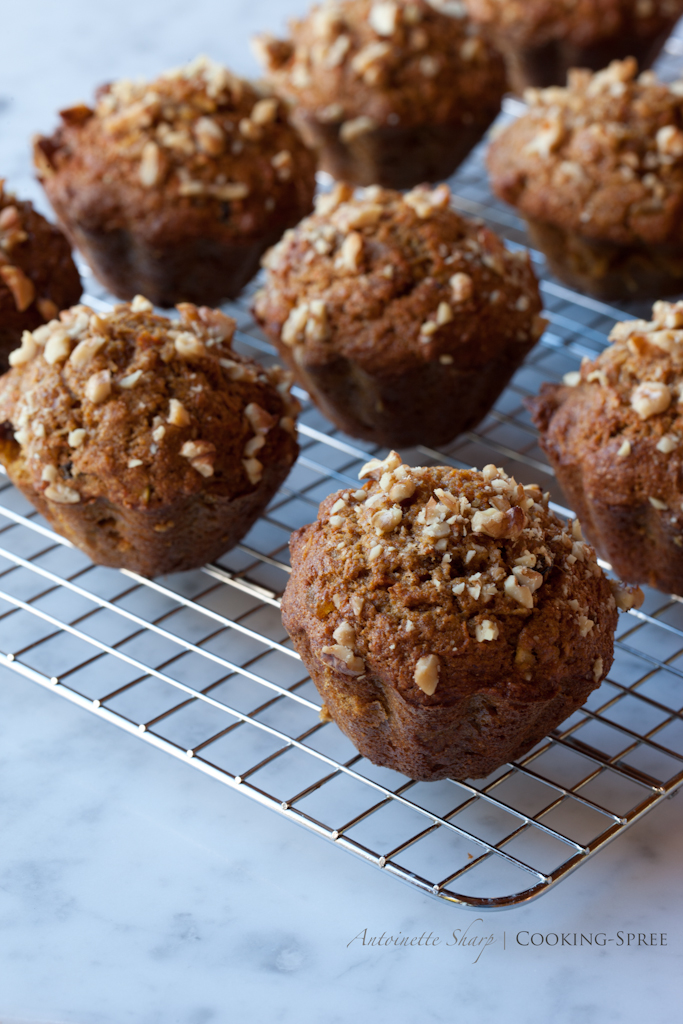
This recipe reads a bit like a carrot cake. Like the cake, and unlike many muffins, it’s chock full of good things our mothers would approve of.  It’s deliciously moist, surprisingly light and un-dense.  It keeps very well, and  it re-heats nicely (if you’re looking around for something to melt your butter on.) But let’s do better for breakfast than carrot cake. We won’t frost them; instead we’ll top with a liberal scattering of healthy walnuts. We’ll only use whole-wheat flour, and we’ll do one better by adding extra wheat-germ. We’ll grate 2 whole cups of  carrots, newly-pulled from the good earth, and add a grated tart apple, a handful of shredded coconut, some warming spices and some strewn bits of candied ginger. And after a few warm bites, we can raise what’s left and call it a glorious morning, because what we call it matters maybe even more than how we start it.

morning glorious muffins

(makes 12 muffins)

  • ½ cup raisins —  (or substitute chopped dried apricots, or dried cranberries, if you’re not a raisin fan)
  • 2 cups whole wheat flour — (either the traditional or white whole wheat – same nutritional content)
  • 1 cup packed light or dark brown sugar
  • 2 teaspoons baking soda
  • 2 teaspoons ground cinnamon
  • 3/4 teaspoon ground ginger
  • ½ teaspoon salt
  • 2 cups peeled and grated carrots
  • 1 large tart apple, peeled, cored and grated
  • ½ cup shredded unsweetened coconut
  • 3/4 cup chopped walnuts – divided — (or substitute pecans, or sunflower seeds)
  • 1/4 cup finely chopped candied ginger
  • 1/3 cup unsweetened wheat germ
  • 3 large eggs
  • 2/3 cup canola oil
  • 1/4 cup orange juice
  • 2 teaspoons vanilla extract

Preheat your oven to 375°F. Lightly grease your muffin tin or line with papers and coat with a non-stick spray.

(Excuse me while I digress. I have this muffin “tin” that’s not a tin, but made of silicone instead and I love it. Here’s why: Muffins release easily from it without the addition of oil.  They cook beautifully in it – as brown as you like. Washing is easy – you can simply turn the cups inside out and give a little scrub. When not in use, roll it up and stuff it into cramped places. I’ll include a picture of it at the bottom of the post. All that being said, obviously, any muffin pan will do! )

Put the raisins (or the dried fruit of your choice) into a small bowl and cover with hot water to plump. Set aside.

In a large bowl, whisk the flour, brown sugar, baking soda, cinnamon, ground ginger, and salt together, until thoroughly combined. Stir in the shredded carrots and apple, the coconut, 1/2 cup of chopped walnuts, finely chopped candied ginger and wheat germ.

In a small bowl, beat together the eggs, oil, orange juice and vanilla extract. Add to the flour mixture and stir until evenly blended. Drain the raisins well, and add them now.

Divide the batter between 12 muffin cups – they’ll be nearly full, but they won’t overflow. They’ll just dome up beautifully. Scatter with approximately ¼ cup chopped walnuts (or your choice of nut or sunflower seeds.) Bake for 25 to 28 minutes, or until a tooth pick or cake tester inserted in the middle comes out clean. Cool in the pan, on a rack, for 5 minutes only. Then remove the muffins to the rack to continue cooling.

~ ~ ~

(Or of course, you may eat them steamy warm, and I highly recommend you do.)

~ ~ ~

My silicone pan is actually one made for brioche but I use it for muffins because I love the shape. Here ’tis: Read more

green salad with caramelized pears, walnuts & cheese

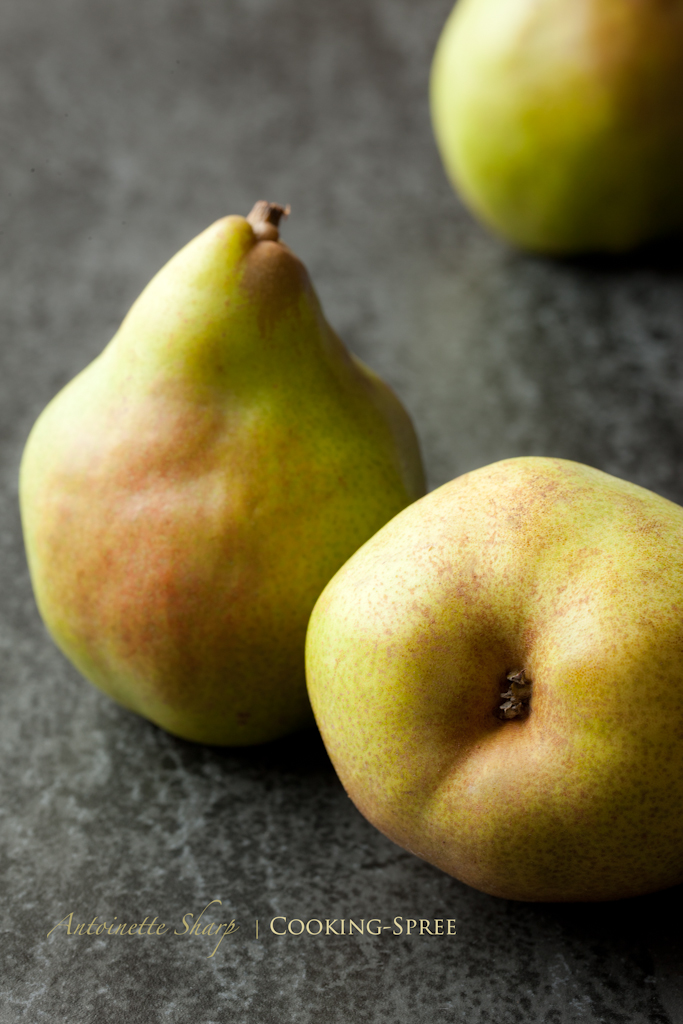
I have a thing for pears. I didn’t always have a thing for pears. But today my thing for pears is huge. And I think perhaps you need no more of my words on pears, but only to gaze (with your own eyes) upon their shapes, their colors,  their stems, their dimples and imperfections,  to know why it is I have this thing called love of pears.

~ ~ ~

pears in pairs

BoscPear

~

~ComicePears

~ ~ ~

Of course it’s not all  about their looks. They’ve got that whole flavor and texture thing going on too. Here’s one delicious way to enjoy these beauties. For this recipe, I like d’Anjou or Barlett or Comice – and since you want them to stand up to the heat of caramelizing, begin with under-ripe fruit.

My husband’s got a thing for blue cheese. So, that’s one way you could make this salad (and I did for him) – but just as good (and far better if you don’t happen to like blue) is Parmigiano-Reggiano. Each of these cheeses pairs up beautifully with pears.

I told you in an earlier post about this Olive Oil store near us. (Also on line www.oilerie.com) We were in there the other day to re-stock on our lemon-olive oil. (So good!) Do you think I could walk past the pear balsamic without tasting? Do you think I could walk out of the store without a little bottle tucked under my arm? (oh it was paid for!)  The salad I made for us last night was made with pear balsamic and walnut oil – neither of these are necessary – at all!  Olive oil and any good balsamic will do perfectly. But I had them, and it was good. Very good.

Green Salad with Caramelized Pears, Walnuts & Cheese

with Walnut-Balsamic Vinaigrette

for the salad:

  • arugula or lettuce of your choice
  • walnuts (toasted for 10 minutes approximately, in 350º oven) (or candied pecans or walnuts – see post May 9th, 2011)
  • cheese of your choice (gorgonzola, other blue, parmiggiano – or perhaps you have another in mind)

for the vinaigrette:

  • good olive oil (or walnut oil)
  • balsamic vinegar (infused or not)
  • kosher or sea salt & pepper to taste
for the caramelized pears: (these quantities are for 2 salad servings)
  • 1 pear (see above for varieties)
  • 1 Tablespoon unsalted butter
  • 2 Tablespoons sugar (vanilla sugar if you have it on hand)
  • balsamic – a splash – optional Read more

chicken tortilla soup

Here’s a soup that pleases crowds. Everyone in our family makes and serves this soup and everyone, from little kids to (occasionally) grumpy grandpas, loves it. A fairly long list of ingredients, but it’s a soup easily concocted, and easy to double or triple when entertaining bigger groups. If a soup can be casual and fun, this one is.

~ ~ ~

Chicken Tortilla Soup

(serves 6)

  • four 6-inch corn tortillas
  • about 2 teaspoons olive oil (to brush on tortillas) + 1 Tablespoon (to sauté vegetables with)
  • 2 – 14 ounce cans low sodium chicken broth (or 28 ounces of your very own!)
  • 2 cups water
  • 1 -14.5 ounce can Mexican-style stewed tomatoes with juice (or see photo for alternative)
  • 1 small can of green chiles, chopped (mild)
  • 1 can black beans, drained and rinsed
  • 1 can cream of corn (the only time I ever use this stuff!)
  • 1 bay leaf
  •  ½ teaspoon ground cumin
  • 1⁄8 teaspoon crushed red pepper
  • 2 or 3 garlic cloves, minced
  • ½ large yellow onion, chopped (1½ cups)
  • ½ red pepper, chopped (about ½ cup)
  • 2 generous Tablespoons fresh lime juice
  • 12 ounces chicken breast meat (from a grilled, roasted or rotisseried chicken) (see NOTE)
  • 2 green onions, sliced
  • ¼ cup chopped cilantro

(NOTE on the chicken: If you use an home-done oven-roasted chicken, save the juices from the bottom of the pan. Refrigerate and remove the fat from the top, and incorporate the tasty juices into your soup.)

Garnishes:

  • sour cream
  • tortilla chips (Tostito lime chips are great here!)
  • grated cheddar cheese
  • sliced or chunked avocado
  • a drizzle of hot sauce of your choice – or a sprinkle of the seasoning blend of your choice (like the fabulous “Uncle Jim’s Secret Spice” – if you’re lucky enough to be Jim’s sister)

(Please imagine shredded cheddar on the bowl below.  Sadly, I forgot to add it before I grabbed my camera, so anxious to lift the spoon, I was!)

If you wanted to add rice, or zucchini, green beans,  mushrooms, or a little sweet potato, you could customize this soup entirely to suit your tastes. Didn’t I tell you it was fun?

Read more

biscotti – two ways

Biscotti are rustically charming Italian twice-baked cookies. Dough is first formed into a long roll and baked, then cut on the diagonal and baked a second time to dry them. They’re a delicious, even politely meant-to-be-dunkable treat. In Italy, biscotti are dunked into coffee and enjoyed for breakfast. In the evenings, after one of their famously-long and leisurely dinners, biscotti might be dipped into wine (especially vin santo.)  In that sense, they’re a sort of chewable, meltable, endlessly-adaptable delivery system for the beverage being enjoyed alongside.  Biscotti have made their way stateside, though some of them are highly sweetened and fancified and bear little resemblance to their Italian ancestor. I’ll offer the more traditional sort here.

What we love about biscotti

they’re positively delicious when, bite-by-bite, they’re softened in coffee

they fall into the “treat” category without being overly sweet

even after weeks (if they last that long) they’re as good as ever

they make someone a sweet little present

they look so cute in a jar

I sent out sample packages of two versions for a vote. The results were close, but the lemon-aniseed version narrowly beat out the orange-walnut among testers. This was a very limited sample so I wouldn’t read much into it if I were you. They’re each good, and each has a following, but my husband and I come down on the side of the Grand Marnier-walnut. With fans in each camp though, I thought it only fair to let you decide for yourselves. (I’d start with the walnut – but you already knew that.) Post a vote if you like! And if you find a way of pairing your biscotti up with a favorite beverage or frozen dessert, I’d love to hear your discoveries.

Grand Marnier Walnut Biscotti

  • 3/4 cup walnuts
  • 8 Tablespoons unsalted butter, softened
  • 1/4 cup sugar
  • 2 eggs
  • 1 teaspoon vanilla extract
  • 1 Tablespoon Grand Marnier (or substitute a brandy or Cognac of your choosing – see NOTE)
  • zest of 1 orange – about 1 Tablespoon
  • 2 cups plus 2 Tablespoon all-purpose flour (plus more for dusting your board)
  • 1½ teaspoons baking powder
  • ¼ teaspoon salt

Read more