Skip to content

Posts tagged ‘recipe’

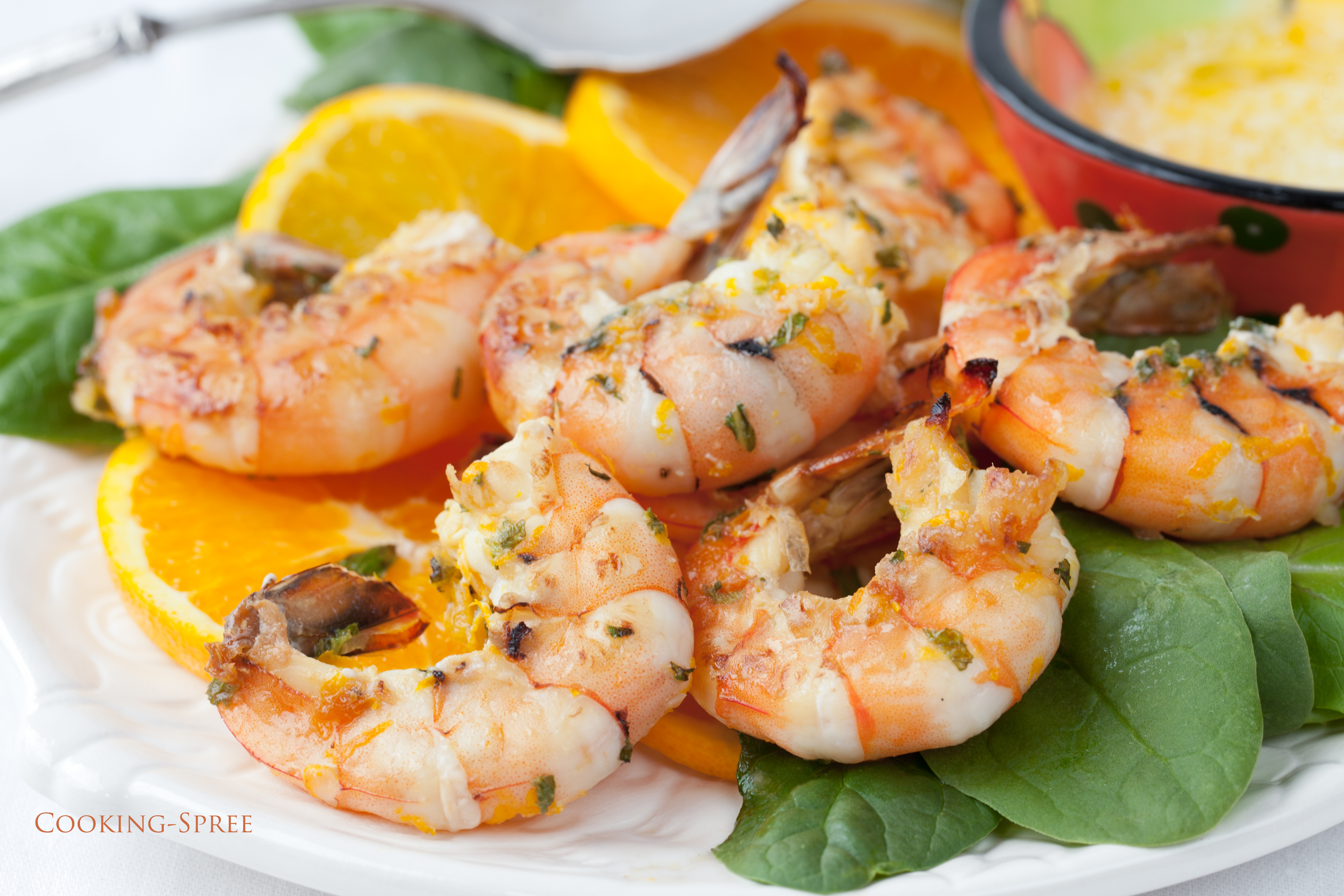
Citrus Broiled Shrimp

Apart from the hours the shrimp spend soaking up the marinade, this dish is quick and easy to prepare. These delicately-flavored, citrusy shrimp are especially delicious (if a little finger-lickingly messy) dipped in melted butter. Though the instructions here are for broiling, they could just as easily be cooked over a hot fire on the grill instead. If set to marinate in the morning, they’d make a fast summer dinner with corn on the cob and a fresh salad. (serves 4)

for the marinade

  • grated zest and juice of 3 oranges
  • grated zest and juice of 1 grapefruit
  • 1/2 cup olive oil
  • 2 tsp. fish sauce (Asian section of your market)
  • 2 shallots, minced
  • 1/2 cup chopped fresh mint
  • 1/2 tsp. fresh thyume leaves

the shrimp

  • 2 pounds extra-large shrimp (16 – 20 count)

additions

  • coarse salt (especially Fleur de Sel)
  • Melted butter for serving (optional)

In a small bowl, whisk all the ingredients for the marinade together.

Spread the cleaned, shelled and de-veined shrimp in a single layer in a baking dish. Pour over the marinade, and cover. Refrigerate for at least 4, and up to 8 hours.

Read more

Greek Salad with Farro

This refreshing salad, with its bright, fresh herbs, crisp cucumber and sweet red bell pepper, its chewy farro, and bits of salty feta,  tastes like summer! It can be the central part of a vegetarian meal, or a side dish for roasted or grilled chicken, or grilled salmon.

Farro is one of those ancient grains making a “come-back,”  showing up on modern grocery shelves. It has a nutty flavor and a pleasingly chewy texture, similar to barley and whole wheat berries (which you could substitute in this recipe if you can’t find farro.) Like many other ancient grains, it’s nutrient-rich.

Salad Ingredients

  • 1 cup farro, rinsed
  • 1 cucumber, peeled, seeded and diced (see NOTE)
  • 1 red bell pepper, cored & seeded, cut in medium dice
  • 1/4 cup red onion, chopped
  • 1/4 cup minced fresh dill or parsley (I prefer the dill)
  • 1/4 cup chopped fresh mint
  • 1 cup crumbled or diced feta cheese
  • 1 cup grape or cherry tomatoes

NOTE: I prefer the long English cucumbers – if you use these, it’s unnecessary to remove the seeds

Red Wine Vinaigrette

  • 3 Tbl. red wine vinegar
  • 1 clove garlic finely minced
  • 1/2 tsp. kosher salt
  • 1/4 cup olive oil

Place rinsed farro in a large saucepan and cover with 2 quarts of salted water. Bring to a boil, reduce heat and simmer, uncovered, for about 30 to 35 minutes. (Farro will have a similar texture to barley when cooked.) Drain it well and set aside to cool completely.

Read more

Grandma Bea’s Banana Bread with Chocolate

Makes two 5 x 9-inch (or 4-1/2 x 8-inch, taller) loaves

Ingredients

  • 3 cups mashed banana (6 – 7) (ripe & soft, but not mushy)
  • 1 tsp. lemon juice
  • 4 eggs
  • 1-1/2 cup sugar
  • 1 cup canola oil
  • 2-1/2 cups all-purpose flour
  • 2 tsp. baking powder
  • 2 tsp. baking soda
  • 1 tsp. salt
  • 1/2 – 3/4 cup chocolate chips
  • 1/2 cup chopped walnuts or hazelnuts, plus more for the top (nuts are optional)

Preheat oven to 350°F. Butter your loaf pans or line them with parchment paper.

With a fork, mash the bananas well in a small bowl. Add lemon juice to prevent discoloration; stir and set aside.

Read more

Mediterranean pizza from the grill

There will be two of us for our pizza party tonight. Happily, we each love the clean and fragrant flavors of the Mediterranean. So, for us, what we’ll put on our grill-fired pizzas is easy. Tonight, Greeks and Italians join hands and toss a mess of really good things on our pies!

the goodies:

  • grilled chicken, marinated Mediterranean-style (now this will not be the star of the show, because really, a wonderful pizza doesn’t need meat! – my prejudice coming out! That being said, it IS really tasty.)
  • roasted red peppers
  • roasted garlic
  • drizzles of basil-thick pesto
  • mozzarella 
  • toasted pine nuts
  • crumbled feta cheese
  • fresh herbs (mostly Greek oregano)

Simple, no? Absolutely!! So here’s how:

prepare:

(These preparations can all be done day-of, or day before. It’ll take you maybe forty-five minutes total prep time, depending on whether you’re working alone or with a buddy, and how many children or dogs you have chasing tails underfoot.)

Chicken – At least two hours before dinner, prepare the marinade for the chicken:

  • 4 boneless, skinless chicken thighs
  • 6 Tbl. olive oil
  • 4 Tbl. fresh-squeezed lemon juice
  • 3 whole garlic cloves, crushed with the back of a knife
  • 1 tsp. dried Oregano, crushed
  • 1/2 tsp. dried thyme, crushed
  • 1/2 tsp. lavender flowers (COMPLETELY optional! but fun)
  • 1/2 tsp. salt
  • 1/4 tsp. pepper

Combine marinade ingredients in small bowl and put the chicken in to marinate for a couple of hours (if you have the time.) Turn occasionally.

The dough –  You’ve already got your pizza dough from yesterday, right? About two hours before dinner, remove the dough from the refrigerator, deflate it, and cut it into four pieces. Form each piece into a ball, cover with plastic.  Allow them to come up to room temperature.  Deflate again (because they will have been slowly rising on the counter) and form into four discs, 3 to 4 inches across. Cover and let sit for 15 minutes. Just before piling with sauce and goodies (see below), roll it out (1/4 to 1/3  inch approximately.)

NOTE: When it comes time, you’ll be taking it out to the grill to bake on one side, then bringing it back to the preparation table to top with the good stuff – and returning to the grill to finish cooking.

Cheese -grate or thinly slice the mozzarella. Crumble the feta – reserve the feta for when the pizza comes off the grill. Refrigerate both.

Roasted garlic – you can see how to roast garlic in my recipe on white bean purée dated May 9, 2011. (You can do this the same time you roast the red peppers. Temperatures vary, but you can compromise.)
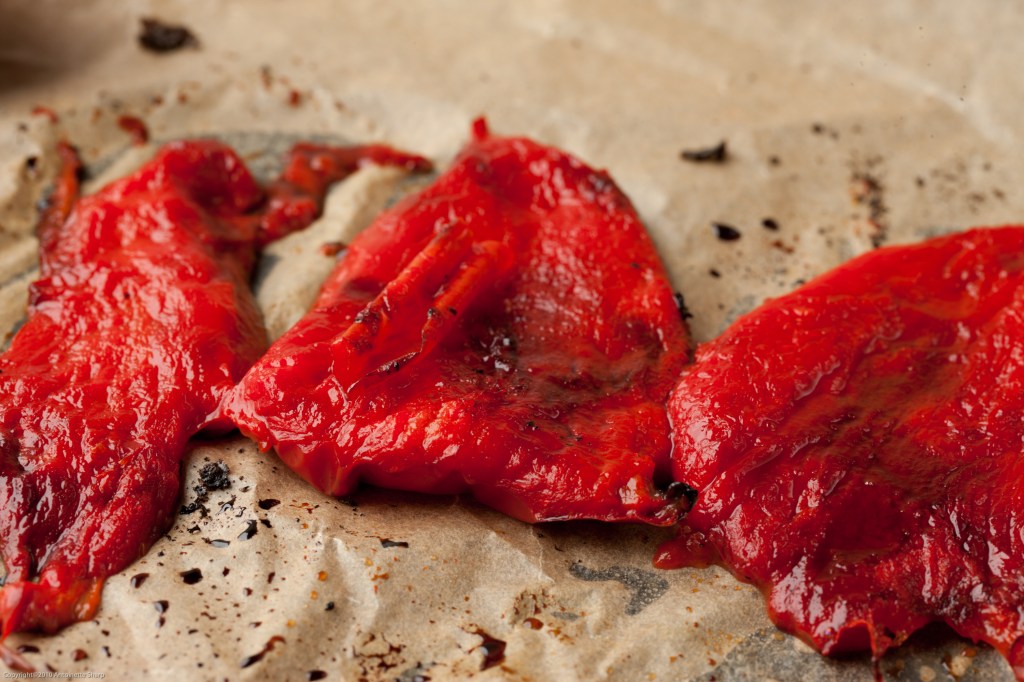
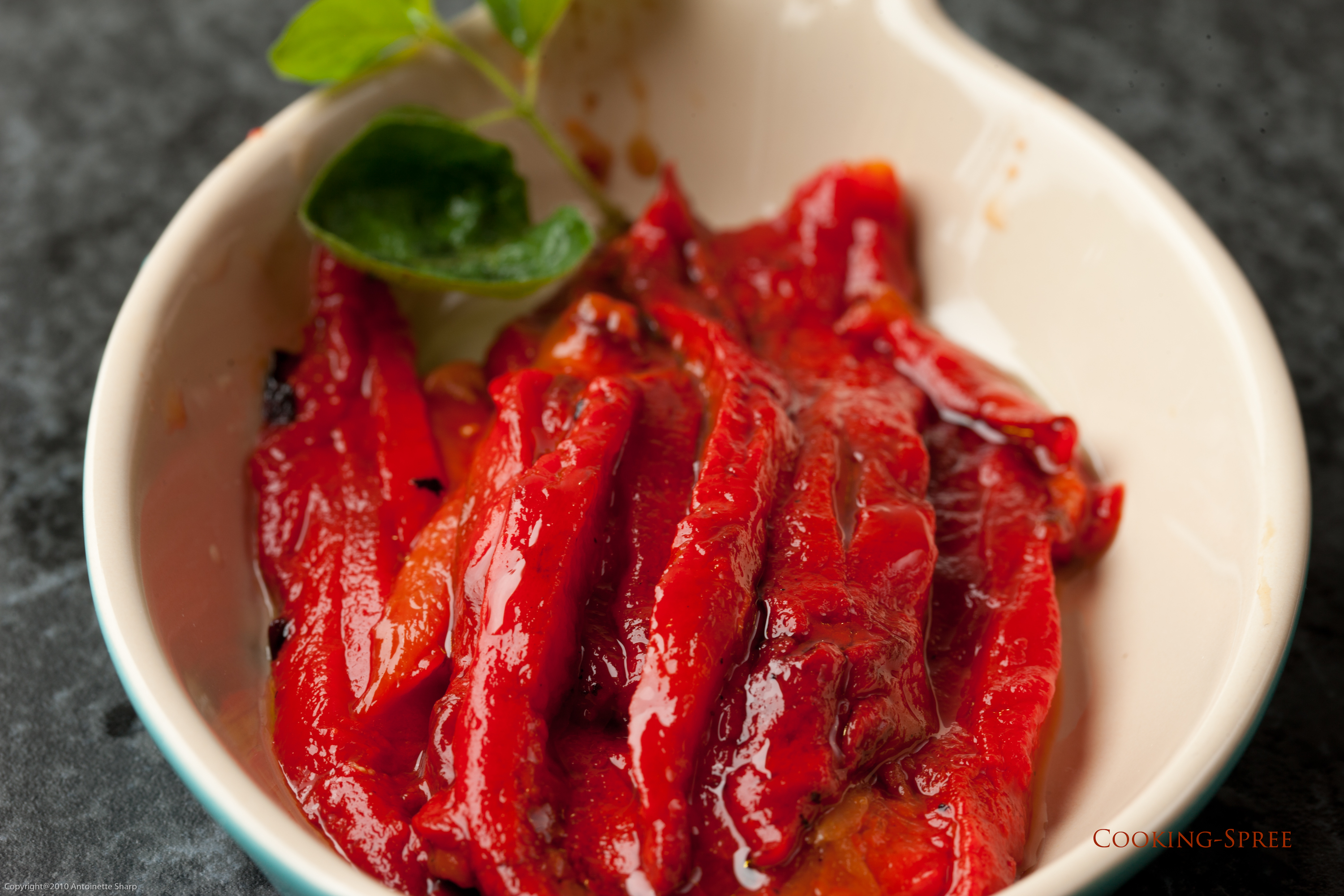
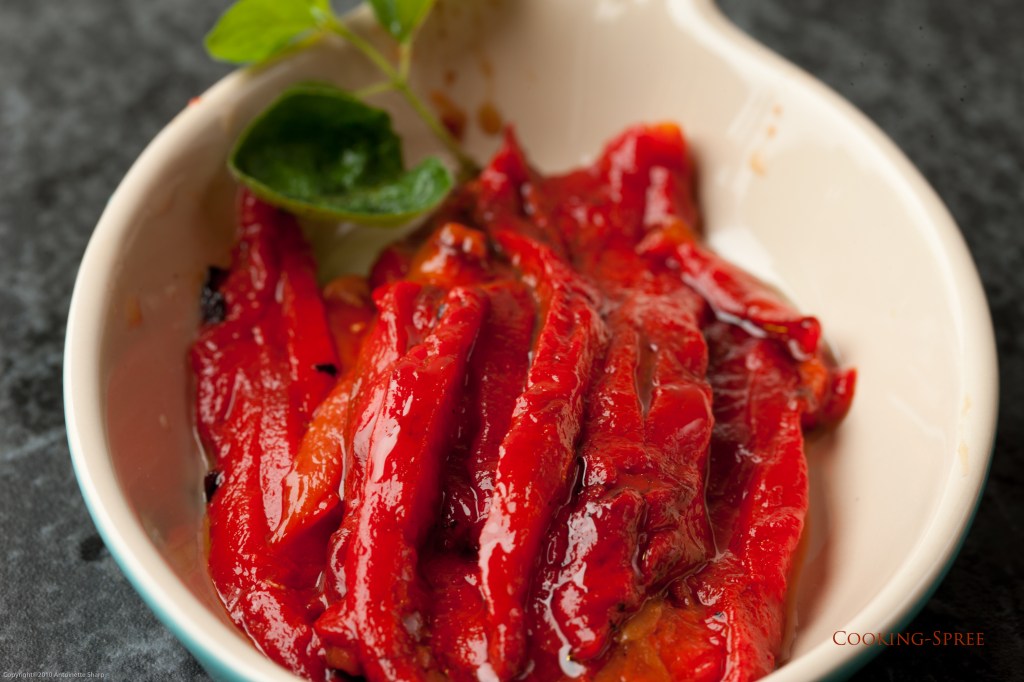
Roasted red pepper – Either buy them in a jar, or — Cut a red pepper in half from top to bottom, removing the seeds. Place cut-side down on a baking sheet (or in the toaster oven, along with your garlic). Roast until the skin blisters and bubbles and begins to blacken. (This would take about 35 minutes in a 450° oven.) Remove from the oven with tongs and drop into a brown paper bag. Close the bag up and allow the peppers to steam in there for maybe ten minutes or so. The skin will peel right off. Slice the roasted peppers into long thin strips.
Pine nuts – In the same oven or toaster oven, set temperature to 300° or so. Roast your pine nuts, tossing a time or two, and watching carefully because they will go from just right to burnt in a flash.

Read more

Rubbed Grilled Salmon

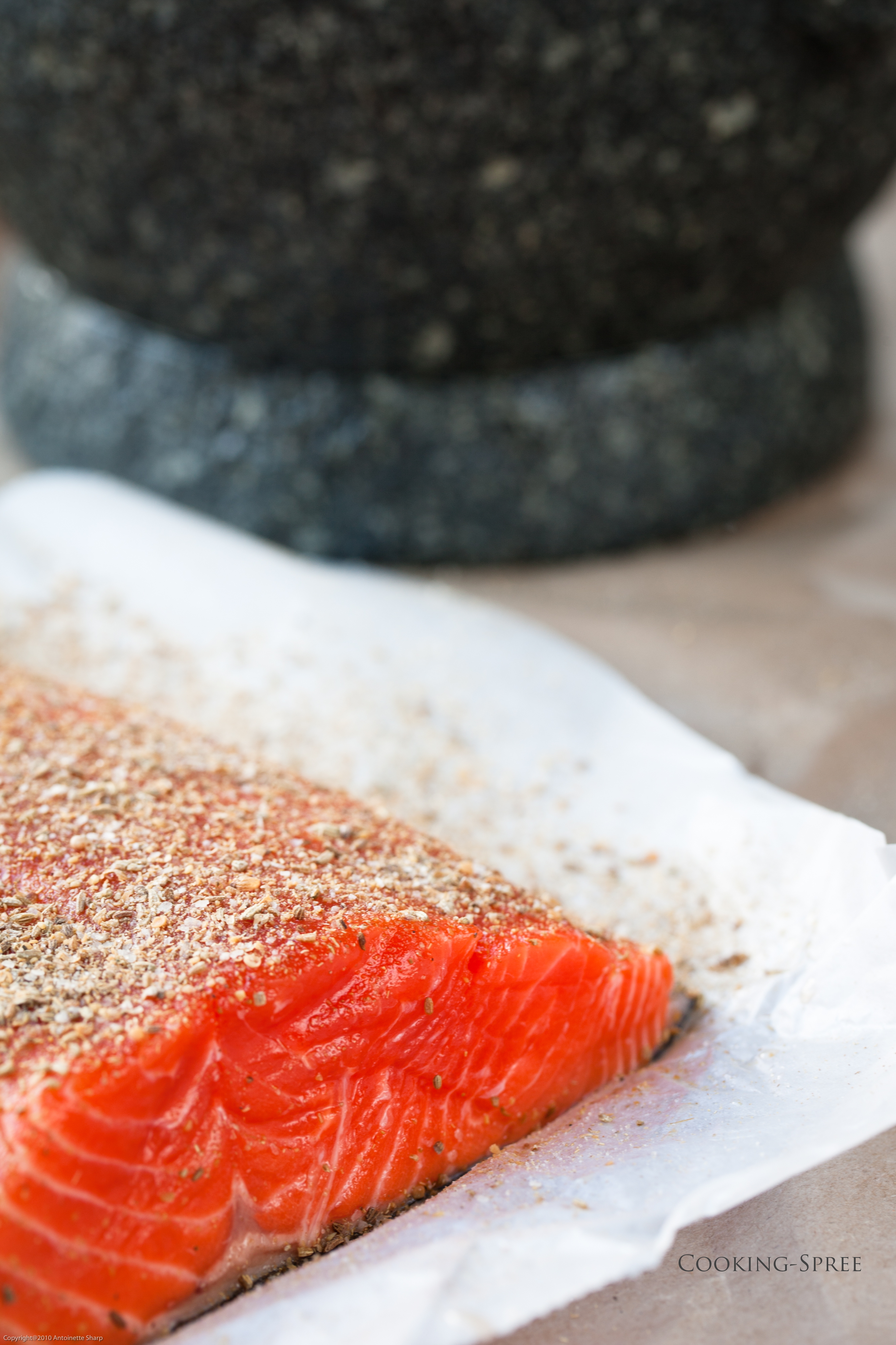
Once salmon season has finally arrived, this is one of our very favorite ways of enjoying it! It’s anything but ordinary, it’s easy, it’s memorable and it’s positively delicious. It all starts with the rub, a collection of whole spices dry-roasted, then ground. I know the list of ingredients may give the appearance of complicated and time-consuming – but the rub will take you about 15 minutes to prepare, and likely last you all summer and maybe months beyond. The rest of the dish is a snap!  You like salmon? You will love this! (You might want to keep the recipe handy – you’ll likely be getting plenty of requests for it.)

The Rub:

In a heavy hot skillet, toast the following ingredients for approximately 4 minutes. You want them to brown slightly and begin to release their aromas. But stop short of smoking!

  • 3 Tbl. coriander seeds
  • 3 Tbl. mustard seeds
  • 3 Tbl. cumin seeds
  • 3 Tbl. dry dill seeds
  • 6 Tbl. fennel seeds

Remove the seeds from the hot pan and allow to cool slightly. Grind in a spice grinder or using a mortar and pestle. My preference is to have a few whole seeds remaining, but you can grind them as finely as you like. Then add:

  • 6 Tbl. sugar
  • 3 Tbl. kosher salt or coarse sea salt
  • 1-1/2 tsp. finely ground pepper

Mix well. Stored in an air-tight jar, it will keep for months.

The Fish:

  • Enough salmon fillets to feed your crowd – steelhead fillets are a good substitute

Sprinkle a generous amount of spice rub over the flesh of the salmon and then pat it in place.  If you’re going to be using an oven, preheat it to 400°F. If using an outdoor gas grill, bring it up to the same temperature.

Read more

Crepes

When I was a newly-married, very young and inexperienced cook, I decided to make crêpes for my mother’s birthday. Bold move!  I’m not sure if I’d ever even eaten a crêpe before, but I’d surely seen them, and knew I’d adore them if given the chance. So I turned to Julia Childs (one of only three cookbooks I had at the time.) Her fully-detailed recipe and the accompanying illustrations gave me all the assurance I needed. The next day, voila! savory chicken crêpes for dinner! And they were a huge hit, talked about for years in our family! I’m thinking that the memory of those crêpes far exceeded their deliciousness, but that’s what happens when the telling of anything gets all wrapped up with love.

There was nothing wrong with that crêpe recipe, in fact it was good, but I’ve found one better.  Chef Alice Waters, after spending years in Paris, once thought of opening her own crêperie. Friends prevailed on her though and eventually she opened Chez Panisse, the now-famous restaurant in Berkeley, instead. Still, her long-time love of crêpes is evident in every tender bite of these delicate little pancakes.  You’ll taste it, I promise.

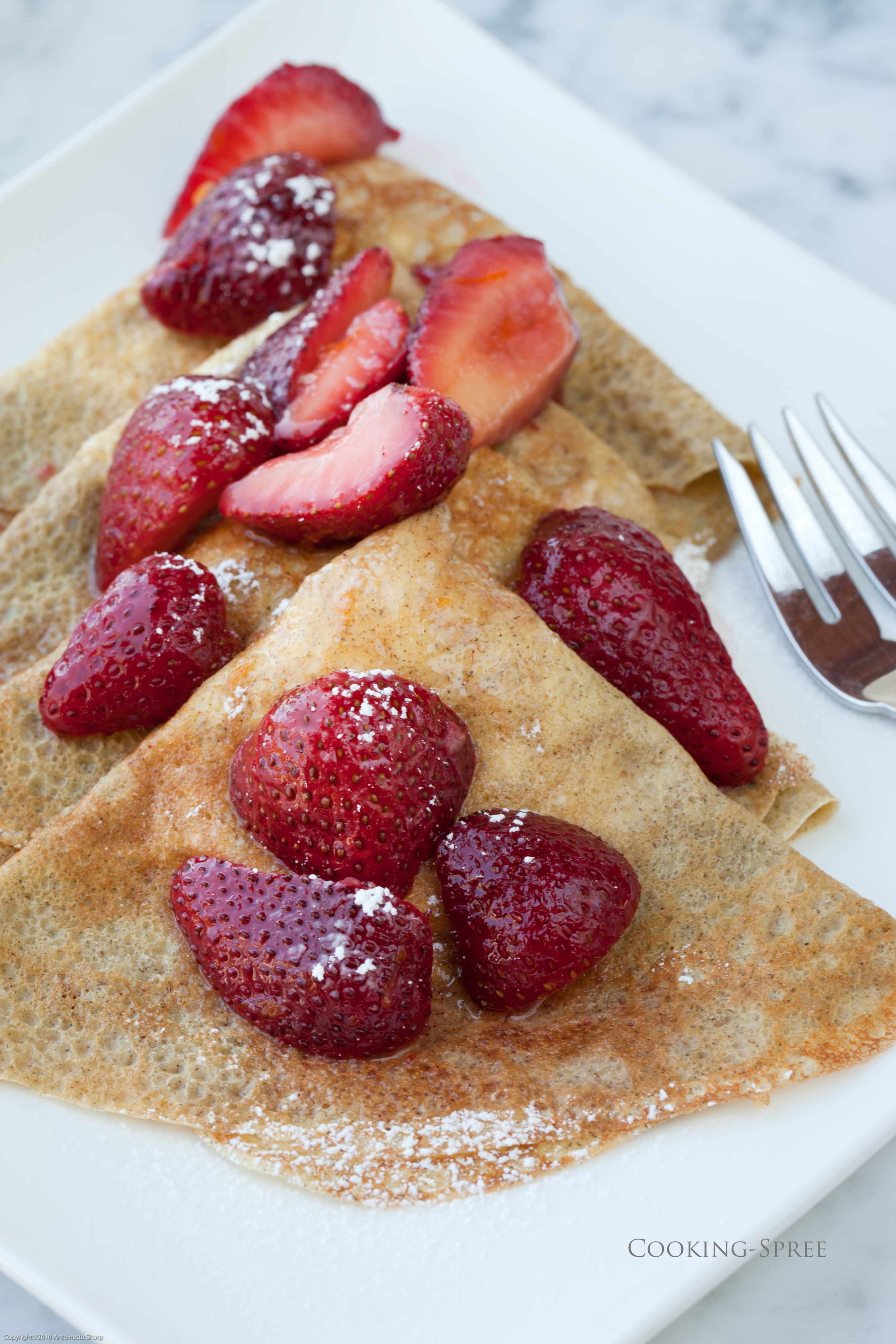
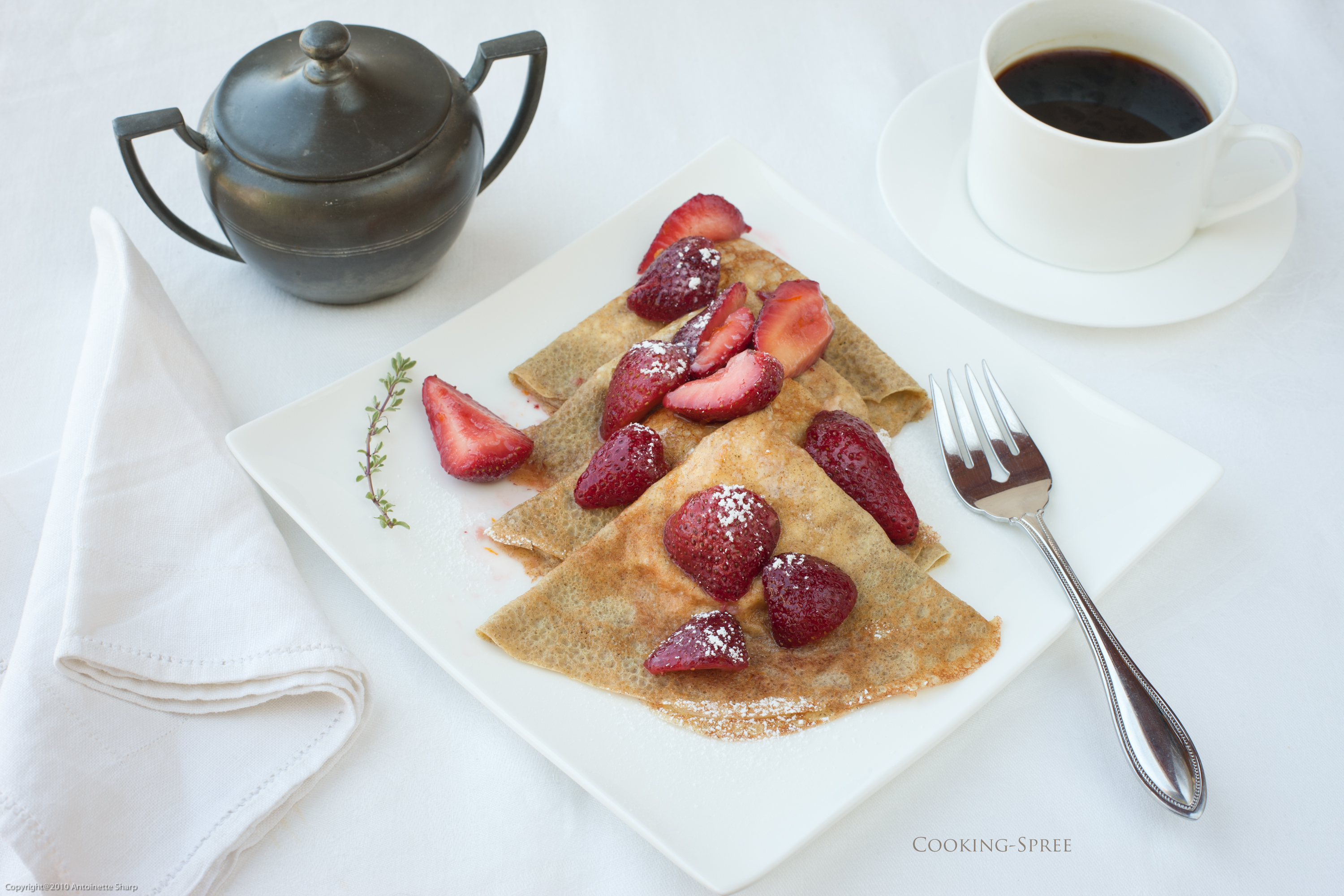
Here I’ve filled them with whole-milk yogurt (or substitute sour cream) and ladled on strawberries, sweetened and bathed in Grand Marnier. We have a couple family birthdays this weekend and this will be a treat worthy of the occasion. Breakfast or dessert? Must we choose?

(The batter is best made a day in advance. Julia advised the same.)

Buckwheat Crêpes

(makes about 4 cups of batter, enough for 30 crêpes)

In a small saucepan, warm the following:

  • 2 cups milk
  • 1/4 tsp. salt
  • 1/2 tsp. sugar
  • 4 Tbl. (half stick) butter

Once the butter has melted, remove the pan from the heat and cool.

In a bowl, measure and stir together:

  • 1 cup unbleached all-purpose flour
  • 1/4 cup buckwheat

Make a well in the flour and with a wooden spoon, stir in

  • 1 Tbl. vegetable oil
  • 3 eggs

Stir until the batter is smooth and free of all lumps. Then, beginning with just a spoonful at a time, add the milk and butter mixture, incorporating fully with each additional spoonful. About half way through the process, you’ll be able to add the remainder all at once; whisk to blend thoroughly. (If you have any lumps remaining, put the batter through a strainer.) Finally, whisk in:

  • 1/2 cup beer

Cover the bowl with plastic and refrigerate overnight. Remove from the refrigerator one hour before frying.

With a moistened cloth or paper towel dipped in vegetable oil, lightly grease a 6- to 8-inch fry pan (with shallow, sloping sides). Put the pan over medium heat. Using a small ladle or large spoon, pour in about 2 tablespoons of batter. Tilt and rotate the pan quickly,  spreading the batter out to cover the bottom of the pan evenly. Cook until brown, just a minute or two. Lifting one corner of the crêpe with a very thin spatula or a butter knife, pick the crêpe up with your fingers and flip it over. Cook briefly on the other side, no more than a minute. (As with other pancakes, you can consider your first two or three to be trials. I should add that the buckwheat will continually drift to the bottom of your bowl, so give the batter a stir each time you ladle new batter out.) You can stack the crêpes on a plate as you go, covering with a tea towel. Just before serving, spoon in the desired filling, fold crêpes in fourths like little handkerchiefs, and put them in a hot oven for just a few minutes. Then spoon on the topping of your choice and dust with a sprinkling of sugar.

These are also tasty with good jam or marmalade folded inside, topped with either  sour cream (that’s been thinned with a bit with cream), or crème frâiche, then dusted with confectioners’ sugar.

For Savory crêpes: These crêpes are equally delicious as a main course when filled with a savory filling. (Think mushrooms, crab, chicken, vegetables, cheese, etc etc etc.! If I get any specific requests, I’ll be happy to share!)

(The crêpe recipe alone comes from Alice Waters’ The Art of Simple Food)

Read more

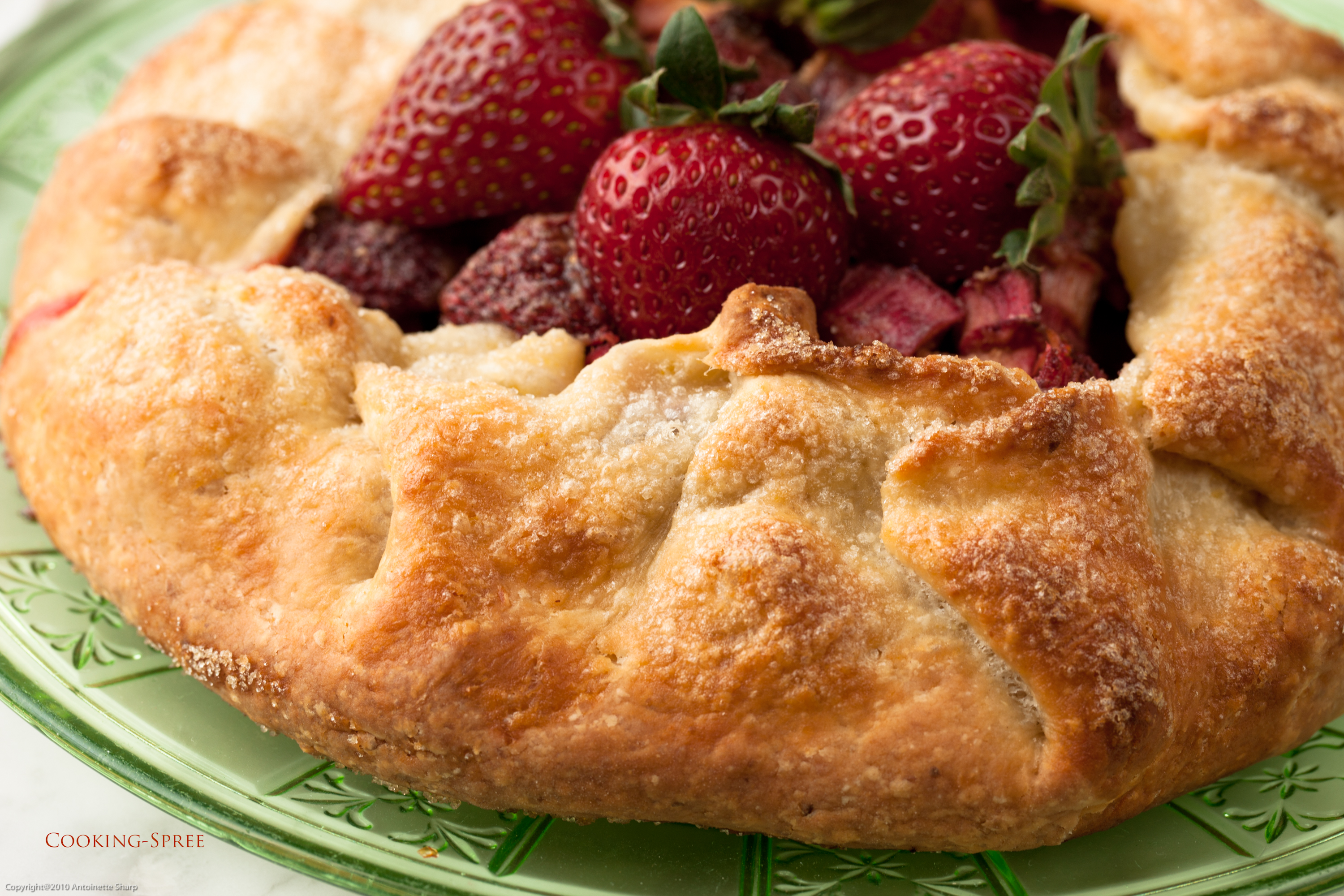
Strawberry & Rhubarb Galette

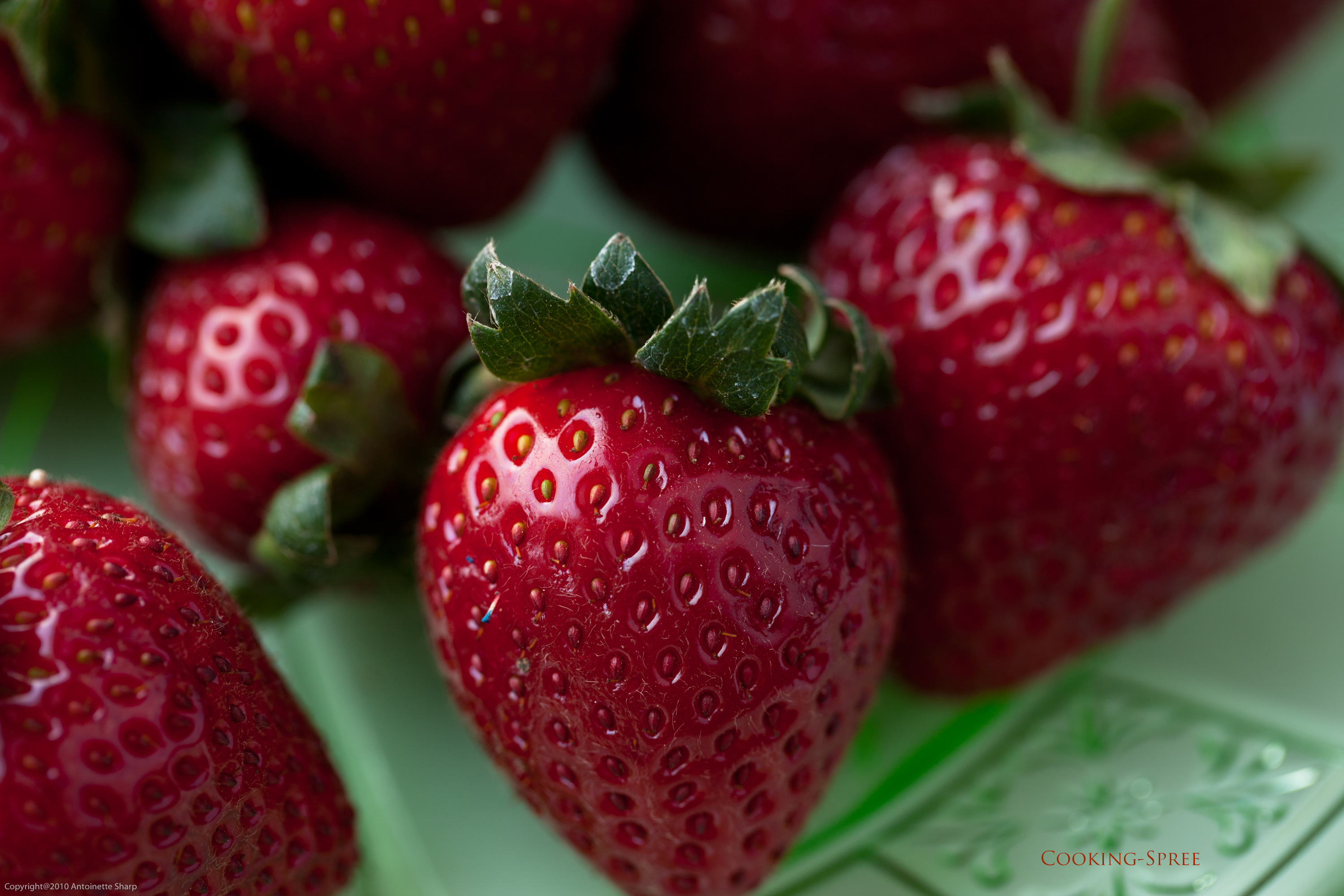
I had a bunch of fresh strawberries sitting on an old plate in a north window this morning as the sun came up. Dawnberries, I thought. And of course I had to bring my camera to where they sat. I can rarely leave anything this beautiful alone. The joy for me in cooking starts here, with beautiful fruit and vegetable shapes and colors. How shadows accentuate their plumpness. How water  makes their washed surfaces glisten.  How creases and dimples and stems and seeds tell the story of how they grew. What beauty crosses our paths in the ordinary, everyday act of putting a meal on the table!

(In the preceding post you’ll see how I came to choose this particular dish to share.)

Strawberry & Rhubarb Galette

For the dough, enough to make two 8-inch galettes:

(using a food processor)

  • 3 T. sour cream (or yogurt or buttermilk)
  • 1/3 cup (approximately) ice water
  • 1 cup all-purpose flour
  • 1/4 cup yellow cornmeal
  • 1 tsp. sugar
  • 1/2 tsp. salt
  • 7 T. cold unsalted butter, cut into 6 to 8 pieces

Stir the sour cream and 1/3 cup ice water together in a small bowl. Put the flour, cornmeal, sugar and salt into the bowl of a food processor fitted with the metal blade. Pulse to blend. Drop the butter pieces into the processor bowl and pulse 8 to 10 times, or until you have a consistency ranging from bread crumbs to pea-size pieces. With the machine running, pour the sour cream and water mixture through the feed tube and combine until the dough forms soft curds. (This will take just a short moment. You don’t want to over-mix, but you probably already knew that.)

Remove the dough from the processor and, separating it into two pieces, quickly shape each into a ball and then flatten to a disc. Wrap each separately in plastic and chill for at least 2 hours. (Alternately, put in the freezer for about 15 minutes.)

Remove from the refrigerator and with a light dusting of flour on your work surface, roll the disc into an 11-inch circle. (You may need to lift and add several light dustings of flour since the dough is very soft, and will roll out very thin.)

Storage of galette dough:  If you decide to only make one galette at a time, the remaining dough can stay in the refrigerator for a couple days; or, with parchment paper between them and wrapped air-tight, they can stay in the freezer for up to a month.

Read more

Moroccan Orange Salad with Red Onions & Black Olives

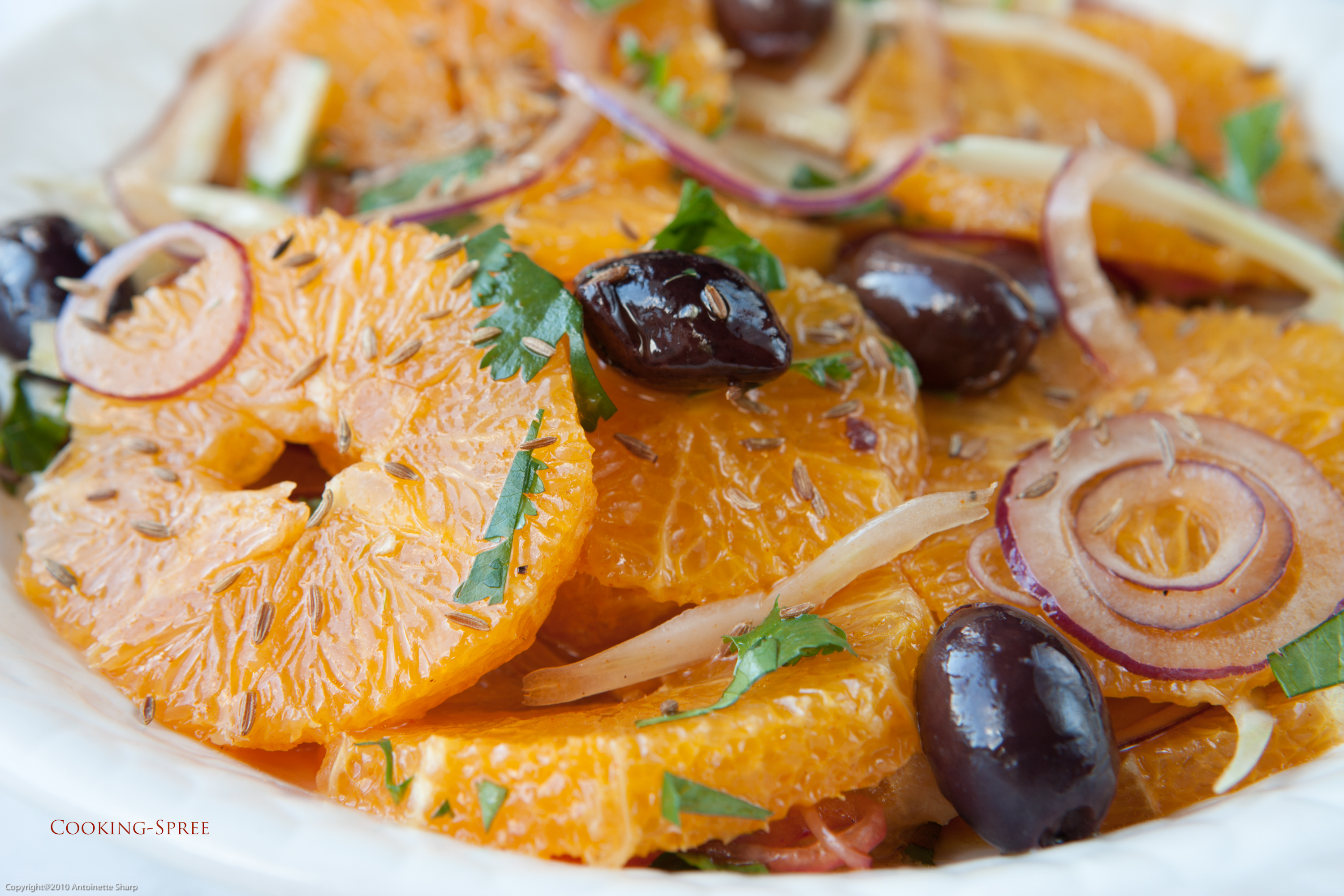
This salad from Morocco is colorful and refreshing, and perhaps unbelievably delicious. If you can be swayed by it’s somewhat unique beauty to try it (as I was), I believe you’ll return to it again and again. I quickly rinse the sliced onions to remove any of their biting sharpness. They mellow almost instantly and the flavors seem to all come together in perfect balance. This salad accompanied our skewered chicken, grilled asparagus and couscous for last night’s dinner. It’s also an excellent accompaniment to hot stews or highly spiced dishes, which is, I suppose, why Moroccans imagined it in the first place. (Recipes for the rest of dinner to follow.)

Orange Salad with Red Onions and Black Olives

(serves 4)

  • 3 fresh navel oranges
  • 1/2 – 1 red onion
  • 1 handful of black olives (12 or so)
  • 2-3 Tbl. olive oil
  • freshly squeezed juice of 1 lime
  • sea salt
  • 1 t. cumin seeds, roasted
  • 1/2 t. Spanish smoked paprika
  • 1 small bunch of cilantro leaves, coarsely chopped
  • Optional: fennel bulb – see below for variation

Roast the cumin seeds on medium-low heat in a small pan. Remove from pan and set aside to cool.   Read more

Hummus – revisited

My daughter Ashley and I laughed the other day about one of her childhood memories. She remembers gazing into the refrigerator, many more times than once, standing there long enough to get goosebumps, and concluding: there’s nothing, absolutely nothing, to eat here!  She said  that the only things we always had in the fridge were lemons and eggs. And though we had a genuine laugh over this the other day, I’m seeing the refrigerator through my little daughter’s eyes now and it’s something I so wish I could do over! It’s not that the refrigerator was near-empty. Aside from the fruit in the crisper though, it was never a storehouse of delights and ready-to-eats. I didn’t see it at the time, but I do now: our refrigerator was not a kid-friendly place.  It wasn’t that there was nothing to eat in there, but that just about everything required a Mama to put it together. Grocery shopping was for me one of those things I’d procrastinate over. I think that reluctance to shop made me more resourceful in the kitchen; but it didn’t make it easy on my girls. Neither did the fact that I didn’t buy junk food. About the time Ashley would sink her head though, sigh and walk away from the refrigerator, I’d jump to.  I’d become a dervish, and pulling things from the pantry and the refrigerator (things she hadn’t recognized as real food – and probably no kid would have) I’d manage to concoct something colorful and nummy…most of the time. I always tried to put love on the table…but I’m wishing now I’d put a little more of it in the fridge, within reach of my kids’ little hands.

I’ve learned and grown some since then (though I still always have  those eggs and lemons.) Like everyone, I have some stand-bys that, when the refrigerator begins to yawn, I employ. One of our favorites is hummus. Why? you ask. The first and best reason is simply that we really like it, a lot! But there’s another good reason (and you’ve already guessed it haven’t you!)  I always have on hand what it takes  to make it.  What can we do with hummus? A generous scoop on the plate, a crater in the middle, a good drizzle of olive oil. Whole-grain crackers or pita. A hard-cooked egg (clever, huh?), or maybe paired with some leftovers from the night before. A beautiful green salad, a little wedge of good cheese, a few olives, a glass of wine. No one complains. It’s what we do at our house when the cupboard is bare.

As good as hummus can be as part of a vegetarian meal, it’s also good as part of a vegetable appetizer; or with fish, or kebobs, or as a spread in a vegetarian sandwich.  I’m saving what I like best about hummus for last though. It ‘s a dip-able, scoop-able, ready-to-eat-able bowlful that kids know JUST what to do with. (What’s more, it’s the perfect consistency for drawing smily-faces.)

Read more

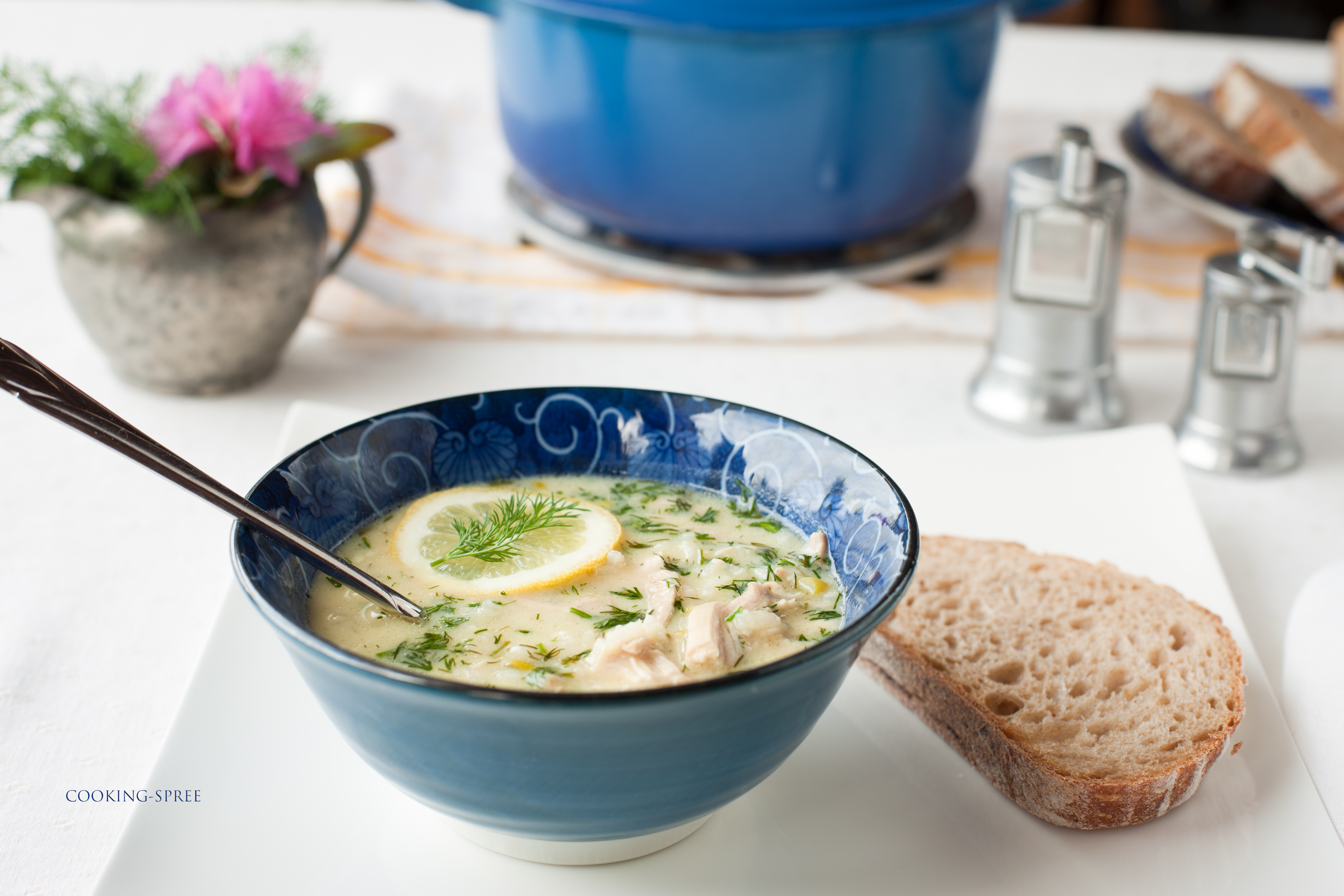
Chicken Soup with Egg-Lemon Sauce

It’s pitiful to beg, I know, but I’m coming dangerously close to it.  Just look over the recipe below, imagining the pairing of these ingredients, and you’ll want to try this soup. (OK, I want you to, but let’s not quibble.) This is one of those comfort foods, and – I’m fully convinced – a cure for what ails. It’s somehow “creamy” with no cream (thanks to the arborio rice.) It’s full of flavor, while still being gentle and so easy to eat. It’s aromatic (thanks to the generous amount of dill and the perfume of the lemon.) It’s a soup equally good in summer as in winter, so Spring would be the perfect time to prove it to yourself! Take the challenge – try this soup – you will not be disappointed! It’s positively kissable.

At the start of “Citrus Month,”  I promised you a soup from Yaya and Papou’s homeland. This is the one. In Greece, until fairly recently, chickens were considered a great delicacy. Except on important feast days, chicken dishes would have been reserved for children and the sick.  This chicken and rice soup, with an egg and lemon “sauce” stirred in at the last moment, was served as a much-loved, one-pot meal at Christmas.  Nowadays, I’d venture to say you can find this on any Greek restaurant menu – but please let me know if you’ve ever tried one better.

The secret to any good soup is in the stock, and this one is no different. If you’re pressed for time, you could use a pre-roasted chicken and a high-quality, store-bought (or previously prepared homemade) chicken stock – but the gentle, two-hour-long cooking of a whole chicken imparts the most delicate, silken of flavors to this broth. If you need to take the short-cut, about 2-1/2 quarts or so of good stock should prove about right, and the meat from about one-half of the chicken. (In either case, please use a free-range, organically fed bird.)

Chicken Soup with Egg-Lemon Sauce (Kotopoulo Soupa, Avgolemono)

(makes 4 to 6 main-course servings – or  6 to 8 for first-course)

  • one 3-to-4-pound free-range chicken, quartered, plus 2 pounds chicken backs, necks and/or wings
  • 1 large onion, halved
  • 2 medium carrots, peeled and quartered
  • 2 bay leaves (if your bay leaves are more than a year old, toss them and start new)
  • 10 – 12 peppercorns
  • 2 Tbl. olive oil
  • 5 scallions (white and most of the green parts), thinly sliced
  • 1 cup chopped fresh dill
  • 2/3 cup of medium-grain rice, such as Arborio
  • 2 large eggs
  • 4-6 Tbl. freshly-sueezed lemon juice
  • Salt and freshly ground black pepper

To greatly reduce the fat content of the resulting broth, and how much skimming is required, I like to start by first removing the skin and all visible fat from the quartered chicken. Remove the fat from the backs of the chicken as well. Place the chicken parts in a large pot and add enough water to cover. Bring to a boil and skim off any foam. Reduce the heat to low and add the onion, carrots, bay leaves, salt and peppercorns. Cover and simmer for two hours, adding a little more water if needed, until the chicken begins to fall from the bones.

Read more