Skip to content

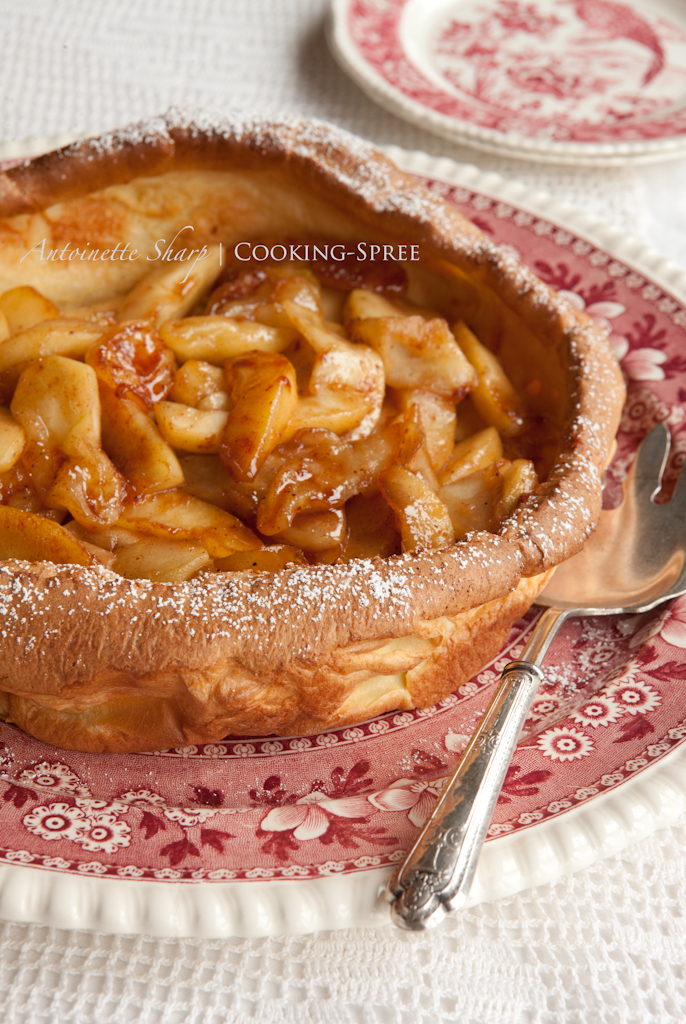
German apple pancake

No food tradition in our family is longer-lived than the German apple pancake. So central a family holiday tradition, so beloved, for years it even served as the “secret password” between my daughters and me. We never needed to use it, but it was comforting knowing it was there. ; )

Every Christmas morning for our children’s lives our house would fill with the sweet perfume of cinnamon and nutmeg and caramelizing apples. Every Christmas morning, the girls’ eyes, and later on, the boy’s, would pop at the big puff of a pancake as it came from the oven. (It’s a bit of a wonderment really.) From the oven, I’d slip it onto a warm platter and then –  into the golden heart of it a steaming skillet-ful of glistening caramelized apples would tumble. I think it’s become impossible for any of us now to separate Christmas morning from the pancake.

As true as that is, we enjoy this special breakfast too much to relegate it to one morning a year. It manages to show up at birthday breakfast tables by request, and occasionally it appears just because  someone’s in need of a little extra lovin’ or an atta-boy or -girl! This year we’ll bring it the New Year’s table too. It’s how our family celebrates with breakfast.

So disappointed I forgot to include the cranberries for this one – it’s positively beautiful with them.

German Apple Pancake

serves 6 to 8 

the pancake:

  • 3 large eggs
  • ¾ cup milk
  • ¾ cup all purpose flour (3¾ oz. – 105 g.)
  • 1 teaspoon vanilla extract
  • ½ teaspoon salt
  • 1 teaspoon granulated sugar
  • 1½ Tablespoons butter

the apples:

  • 1½ pounds apples (up to 2 pounds will work) – Granny Smith are a good choice
  • ¼ cup melted butter
  • ¼ cup light brown sugar
  • ½ teaspoon ground cinnamon
  • ½ teaspoon ground nutmeg (either new or freshly grated is best)
  • ½ cranberries (optional)

the sprinkling of snow:

  • powdered sugar

Place an oven rack in the middle position. Preheat the oven to 500°F.

Into a blender (or food processor) break 3 eggs. Add milk and vanilla, and process for about 30 seconds. Add the flour, salt and sugar and process until lumps are gone, about 15 seconds. (Don’t overmix.) Allow to “bloom” – for flour to absorb the liquids completely – at least 15 minutes, and as long as overnight. Briefly mix again before pouring in the pan.

With oven at 500°F, melt 1½ Tablespoons butter in a heavy skillet over medium heat- cast iron works very well for this. When the butter has turned to foam, swirl it around the bottom of the pan, and slightly up the sides. Pour in the pancake batter and place the pan in the oven. Promptly lower the heat to 425°F. Cook for 10 minutes at this setting, and then lower the heat to 350°F and cook for about 15 minutes longer. (If during the initial stages of the baking, the center of the pancakes bubbles up and forms a little mountain, pierce it with a long handled fork. No worries if it doesn’t completely flatten though because the apples will take care of most of that.) Like magic, the sides of the pancake will rise up and form a bowl.  Read more

wishes


I take a break today from the extraordinary messes I make when I cook and take pictures of my food. Someday I may share photos of the paths of my destruction. It’s good for a laugh. But not today. Today, let me just wish you, in this season of lights, all good things.

~ ~ ~

May you come in out of the cold…

…may you be warmed and may you be fed…

…may you hold some dear one close…

…may you paint your toenails red…

…may you see art where you had not…

…may you know wonder…

…and may you share it…

Read more

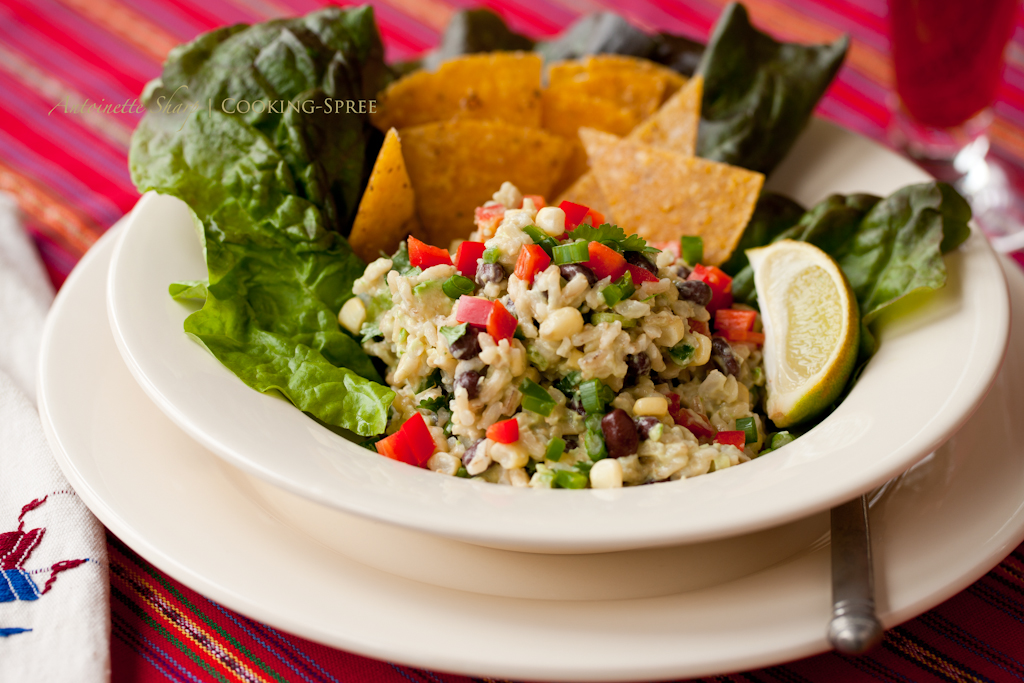
Fiesta Rice & Black Bean Salad

We pick up the series on Rice & Beans with Installment #6. (The series offers one idea on how we can help feed the hungry. If you’d like background, please see the NOTE at the bottom of this post.)

You know how in the dead of winter, when your bones are cold and your lips are chapped and you’re wearing your socks to bed, you long for something warm in your belly? Soups, stews, chilies, or maybe for you it’s a hearty roast and potatoes.

Does it ever happen for you in the dead of winter when your bones are cold that you long instead for something that smacks of warm summer days, open windows, t-shirts and flip flops?  Something on your plate that reminds you there IS a sun, and it’s on its way around again. Sometimes we just need a reminder that winter doesn’t last forever. And if you’re in need of such a reminder, and wanting the feel and taste of summer in your mouth again, this may be just what you’re in need of. I’ve posted lots of soups and stews in this series. Time to shake it up a bit. Time for a party of a salad.

This is a meal easily put together. The ingredients can be picked up at just about any market, any time of year. Not a thing to cook but rice. Open a can of beans and a bag of frozen corn, do a little chopping & tossing. Whir up a little dressing. There’s no meat, but plenty of lean protein from the rice and beans. With its tasty guacamole dressing, its a fresh sort of delicious. It’s light-tasting but satisfyingly filling. It’s a bite from a place where the sun always shines.

Fiesta Rice & Black Bean Salad

salad ingredients

  • 1 cup uncooked rice (your choice of white or brown)
  • 1 – 15 ounce can black beans, rinsed and drained
  • 1 cup thawed frozen corn
  • 1 medium red bell pepper, chopped
  • 8 green onions sliced
  • ¼ cup plus cilantro
  • 2 large or 3 medium jalapeño peppers, seeded, de-ribbed, and minced

the dressing

  • 1 large clove garlic
  • 2 ripe avocados
  • ¼ cup plain yogurt
  • 4 green onions roughly chopped
  • 2 Tablespoons chopped cilantro
  • 1 Tablespoon (to 2) fresh lemon juice
  • ¾ teaspoon salt
  • ¾ teaspoon ground cumin
  • ¼ teaspoon ground pepper

To serve:

  • leaf lettuce
  • tortilla chips
  • wedges of lime

Cook the rice and allow to come to room temperature. Add the black beans, corn, about ¾ of the chopped red pepper, 8 green onions sliced, ¼ cup chopped cilantro and the diced  jalapeños. Season with salt and pepper. Toss together and chill.

Prepare the dressing:

Into the jar of a blender put the minced garlic, 1 avocado in chunks, the remaining 4 green onions coarsely chopped, the yogurt, remaining 2 Tablespoons cilantro, lemon juice, salt, pepper and cumin. Process until smooth. Taste for salt and lemon, adding more as necessary.

Toss the rice and beans with the dressing and chill. Before serving cut the avocado in ¾-inch pieces and gently toss together with the rest of the salad. Place lettuce leaves on plates or large salad bowls, top with fiesta salad, scatter the last bit of red pepper over top and serve with tortilla chips and wedges of lime.

~ ~ ~

Read more

our last days in Sedona

Coming into Sedona, you don’t miss it. This place announces itself without an ounce of self-consciousness. It’s riotous, full of absolutely everything southwest and some that tries hard to be. It wasn’t until close to the end of our trip that we actually stopped in. Funky, up-beat singing-out-loud music, room after room of color explosions, statuary, pottery, icons, spices, ornaments, jewelry, chilies and garlic braids hanging from rafters, cactus (living and make-believe), cow skulls, every sort of kitsch and wanne-be art, and some really cool stuff. We didn’t buy a thing. We had such fun!

~ ~ ~

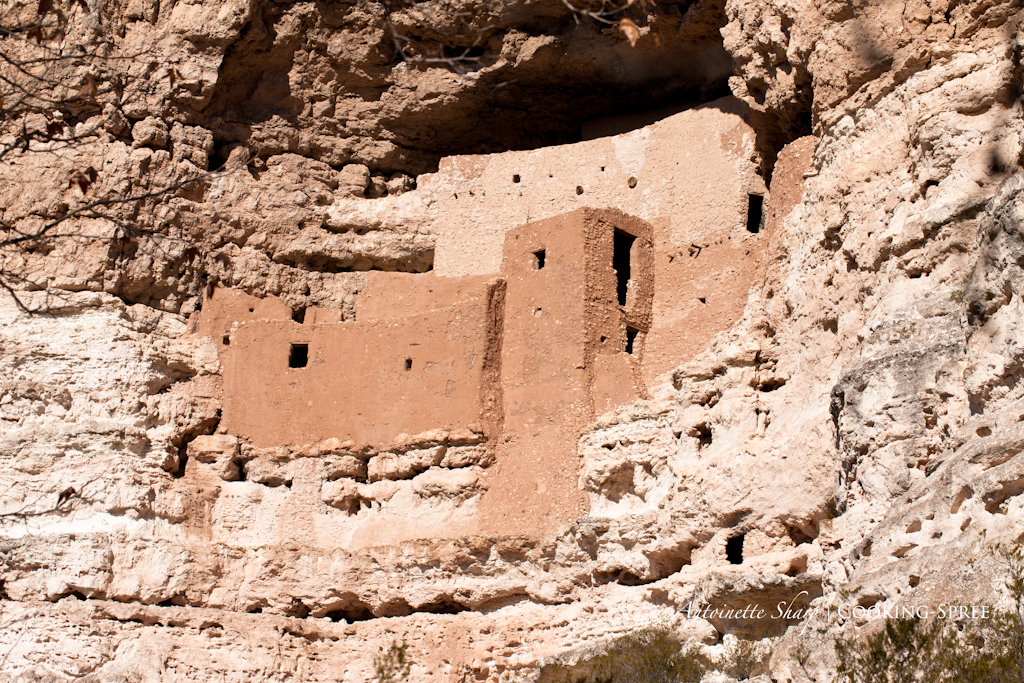
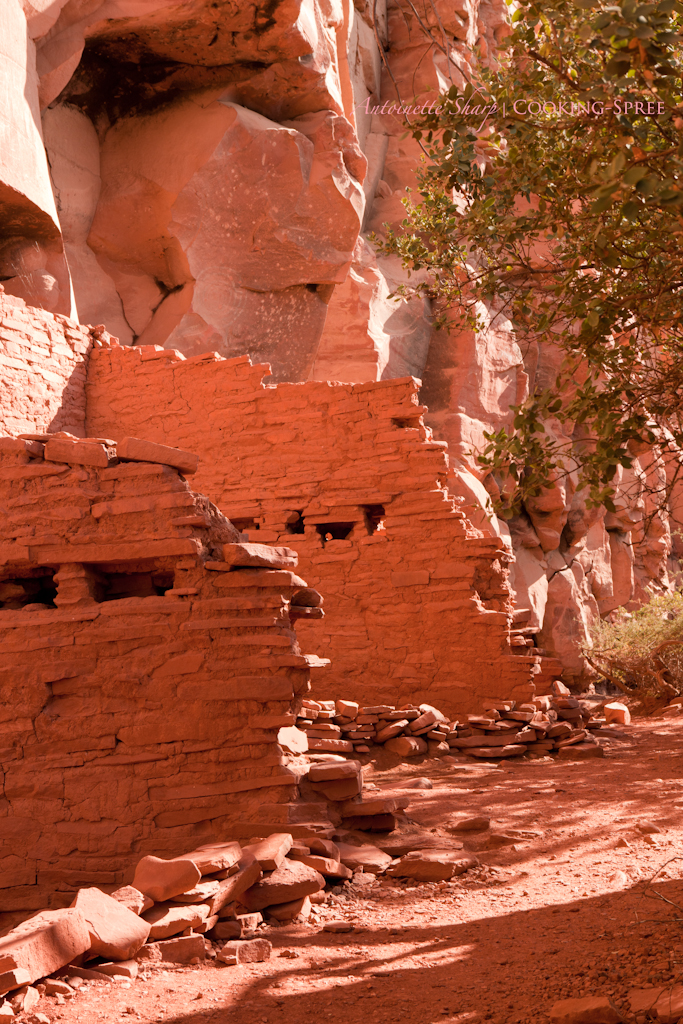
Changing gears completely (and thankful we had an hour or so to do it in) we visited Montezuma’s Castle.  The site was inappropriately named because it had absolutely nothing to do with Montezuma – but the namers were rather clueless on that point. It was inhabited by people commonly referred to as the Sinagua between 1100 and 1400 c.a. Then, like so many of the settlements (now ruins) in this part of the world, it was mysteriously evacuated.

One wonders why. It sat in such an idyllic setting. A lovely little valley, treed, alongside a gently rolling river. Crops of corn and cotton were planted on the valley floor. The adobe-bricked buildings, most of them perched high up and inside the cliffs, faced south to take advantage of the solar warmth in winter, while being shaded from the searing heat of summer. It was a spot well-chosen.

We saw beehives, laden with sweet honey, perched inside openings in the cliff.

Swallow nests lined the ceilings.

You could picture them living here. You could almost hear their echoing voices.

Read more

Smoky corn & sweet potato chowder

We woke in the dark, piled on layers of clothes and loaded cameras in the car. We gassed up and fearlessly set out in the sub-arctic temperatures of sunny Arizona, our hearts tilting toward Grand Canyon. Because it was dark and there was little else to look at, I became fascinated with the external temperature indicator on the dash. We left Sedona at 22°F. We climbed higher, through Oak Creek Canyon in the blue black frigid darkness and the temperature kept dropping. I couldn’t resist taking pictures of the numbers on the dash. 15°, 9°, 0°. Past Flagstaff, we changed directions, I think we were heading north, but I know we were heading colder. Somewhere up there on this wide white expanse, the temperature dropped to -15°. That’s 15°  below ZERO! I texted the proof back home.

I try not to get too terribly excited when my husband’s driving, but I was shrieking in my own head – I’d never been in a place this cold before, “I” was breaking records here! He (the rational one who considers our safety) thought of turning around and heading back. What if we stopped the car and it wouldn’t start again? Then where would we be? Me (the fool, who thrills to adventure) thought this was really cool! Happily, the fool prevailed – we drove on.

In another hour or so, we arrived. The brilliant sun shone. Long icicles dripped crystal drops. Blue-black ravens made their cracking sounds high in the branches above us.

Bundled tight, we ran for the edge to see to the bottom. It was dizzying, glorious!

We snapped our dozens of photos including one of our own long shadows holding hands. Then we headed for the warmth of the lodge, with its rockers on the porch, its grand-scale stone fireplace, and the soup we remembered from the last time we were here.

Last time, I’d even begged for the recipe for that soup. And they gave it to me!

We kept flipping the menu over, front to back, and back to front again, sure we’d missed the soup somehow. It wasn’t there.

We asked our server and were told that another restaurant in the canyon serves it regularly and that it only makes its way up to the big lodge on occasion. This was not to be such an occasion. There was no soup for us that day.

Did it dim our enthusiasm? Not one bit.

~ ~ ~

But with corn chowder still on my mind when we returned home, I had to make a pot. This pot though varies hugely from the one we’d eaten at the canyon. That one used a half gallon of cream. I kid you not. A half gallon! Granted it fed quite a few people, but there was just no way I could bring myself to do it.

I’m pointing no fingers, but I’ve noticed we’re all eating quite well this time of year. Sneaking cookies and egg nog, seconds on gravy and mashed potatoes. But here’s an offering that’s very low fat, creamy with no cream, sweet with no sugar, colorful with no candied sprinkles. What’s more, it’s inexpensive and easy to prepare.  Here’s how:

______________

Smoky Corn & Sweet Potato Chowder

(about 6 good servings)

1 medium-large yellow onion, chopped  (2 cups)

4 cloves garlic, minced

one 3- to 3½-inch jalapeno pepper, finely diced

1 Tablespoon olive oil

1½ teaspoon salt (plus more to taste)

1 Tablespoon cumin seed, dry roasted & then ground (or 4 teaspoons ground cumin)

¼ teaspoon cayenne pepper

¾ teaspoon liquid smoke

6 cups chicken, turkey or vegetable stock

2 medium-large sweet potatoes, in ½-inch cubes

6 cups frozen corn (3- 10 oz.bags)

1 large red bell pepper, medium-diced

_____

Garnish:

  • corn tortillas – sliced in ¼-inch slices, fried until crispy in small amount of olive oil
  • finely diced red onion
  • finely diced red pepper
  • small bunch cilantro, coarsely chopped

SweetPotatoCornChowder-1

Roast the cumin seed in a dry skillet, medium-low heat until its begun to brown and its aroma is rising. Grind using a mortar and pestle or a spice grinder. (Alternately use ground cumin. But the flavor of toasted cumin is wonderful and worth the extra step.)

Read more

a Christmas bread – Panettone

I caught a little flack from family for sharing the caramel corn. Some thought (kiddingly I’m sure) that it ought to be “sacred,” a family secret, vaulted away. These are NOT stingy people! They’re tremendously generous. Their hearts are huge. But they did have serious qualms about my going public with Ruthie’s caramel corn.

And yet…I’m here to share. So while I’m at it (and already in questionable standing with the family)… here comes another recipe from our holiday house to yours.

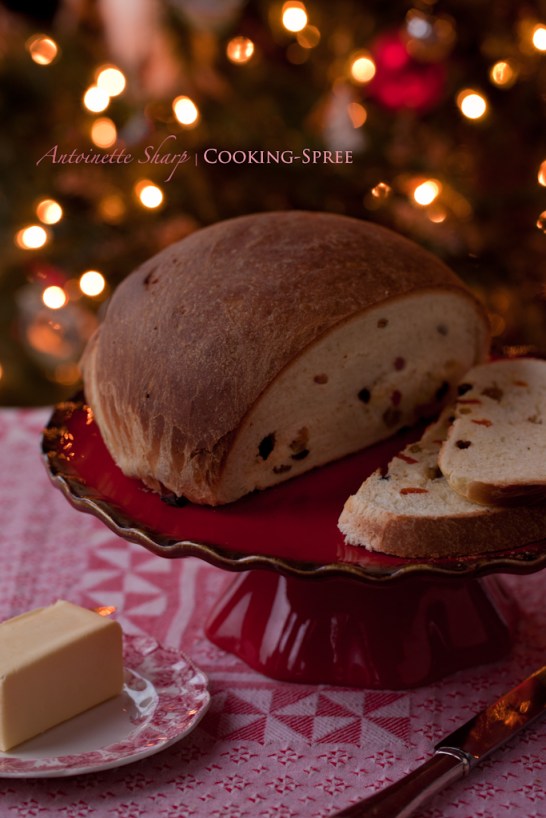
This bread is so deliciously fragrant! It’s a soft loaf, delicately but surely flavored with anise, slightly sweet and full of colorful dried fruit. It’s the traditional loaf on Italian tables for Christmas and New Years and has been a tradition in our non-Italian family since I was a kid and our mom first learned to bake homemade bread.  You can eat it with just a creamy smear of sweet butter or – as we do – toasted, with its fragrance roused to life again. We’ll have it for breakfast along with our scrambled eggs and fresh-squeezed juice.

I’ve suggested certain fruits to go inside, but really the choice is entirely yours. Mom used to make it with those candied fruits and peels (which, as a kid, I detested and had to go to a lot of trouble to pick out so I could get to the truly good stuff.) I’m saving you the trouble. Use whatever dried fruits you like…cherries, apricots, golden or dark raisins, cranberries or candied citrus rinds or softer nuts like walnuts or pecans. Traditionally, it’s one half raisins and one half other mixed fruits, but you can do all raisins if you like, or none at all. Be sure though not to skimp on the anise (neither the extract nor the seeds) because that’s where all the heady perfume comes from! Can you stand being adored? Then you will be so glad you made this bread!

Panettone – Christmas Bread

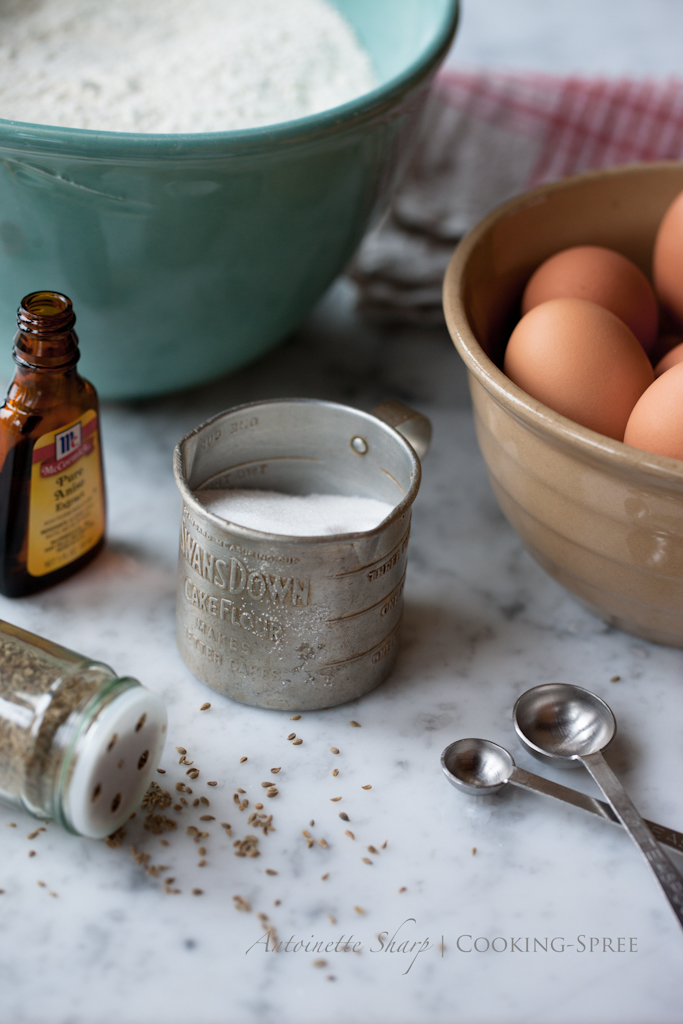
  • 2 Tablespoons yeast (or two packets)
  • ¼ cup lukewarm water (100-110°F)
  • 3/4 cup boiling water
  • ½ cup unsalted butter
  • ½ cup sugar
  • 2 teaspoons salt
  • 4 large eggs
  • ¾ teaspoon anise extract
  • 2 teaspoons crushed anise seed
  • 6 to 6½ cups all-purpose flour or bread flour  (total weight 30 ounces – or 1 pound, 14 ounces)
  • 2 cups dried fruit (1 cup golden or dark raisins plus 1 cup total of a variety – dried cherries, dried apricots, cranberries, dried pineapple, candied citrus rinds or soft nuts like walnuts or pecans)

My personal choice – 1 cup raisins (¾ golden, ¼ dark), and 1 cup equally divided between apricots, tart cherries and dried bing cherries. If I had on hand a bit of candied orange rind, I’d add it too, but I don’t always.

Dissolve the yeast in ¼ cup of lukewarm water. (Don’t exceed 115°F. If you don’t have a thermometer, the elbow is a good indicator of the right temp. It’s baby bathwater warm.) Set aside.

Place the butter, sugar and salt in a medium size bowl and pour boiling water over top. Stir to melt and dissolve, then set aside to cool. (Again, no warmer than luke warm.) Once it’s cooled, add the eggs, anise extract and crushed anise seeds. (You can use mortar and pestle to crush…they don’t need to be ground.) If you’ve got a stand mixer than can knead your bread for you, hooray! Transfer these wet ingredients to the bowl of your mixer.

Measure out 6 cups of flour. Have another ½ cup standing by in case you need it. Gradually add the flour to the liquid and knead with dough hook attachment for about 7 or 8 minutes (or longer if required to achieve proper consistency.) You’re looking for most of the dough to be pulled away from the sides of the bowl. When you press the dough with a finger, the dough bounces back at you. And when you lightly squeeze it between your fingers, it almost wants to stick but you’re able to ply your fingers from it without taking dough with. The surface is smooth and baby’s bottom soft.

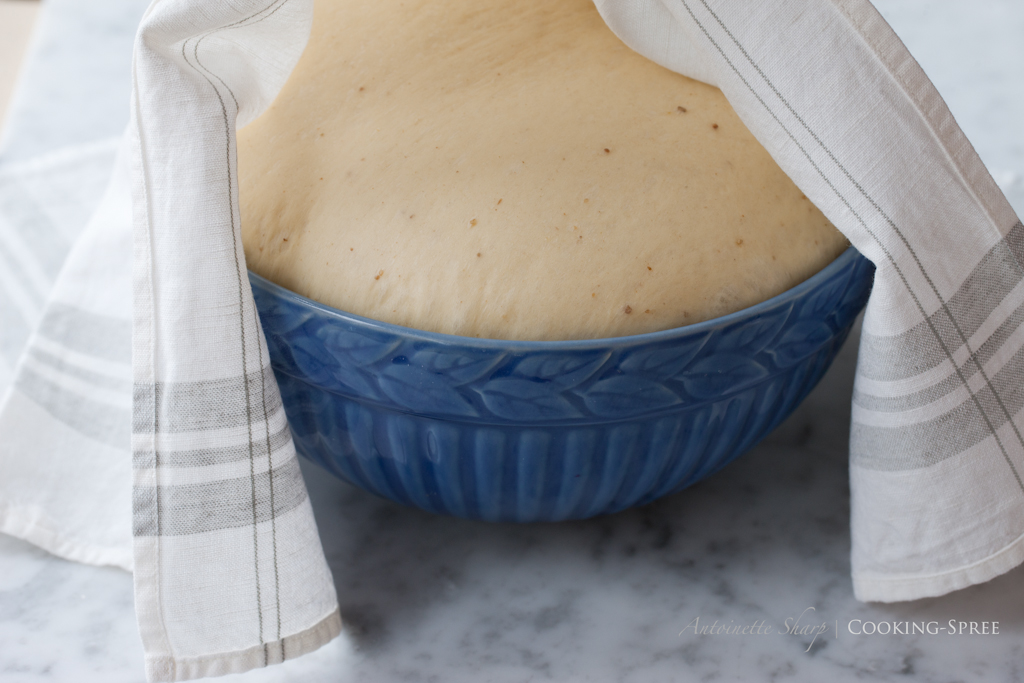
Lightly butter the inside of a large bowl. Form the dough into a ball, place inside the bowl, and roll around the sides of the bowl to very lightly coat with butter. Cover with plastic wrap. Place in a warm, draft-free place to rise for 1 hour. (My preferred place is inside a cold oven. I place another bowl inside the oven filled with hot water. It creates just the right environment, rising the dough but not too quickly. It should be doubled in about 1 hour.)

 While the dough is rising, place the raisins in a bowl and cover with boiling water. Allow to sit for 30 minutes and plump up a bit. Drain them in a collander and then place them on a clean towel, patting to dry.

Cut the fruits into approximately raisin-size pieces.  Mix all the fruits together.

Once dough has doubled, remove the plastic wrap, and with your fist, deflate the mound. One gentle punch or two will do.

Lay the dough out fairly flat; pile the fruits on top. Roll the dough around the fruit and gently knead, incorporating the fruit. Gather into a rough ball, then tuck the sides of the dough under until you’ve again achieved a smooth, round ball. Place it back inside the bowl to rise as before, a second time. Allow to rise until double, about an hour or so. (This may take a bit longer with the heavy fruit now inside.)

Once doubled the 2nd time, split dough in two fairly equal pieces. Allow to rest for 5 minutes under a towel. 

Forming the Loaves:  The object is to stretch the top, tucking the sides down and to the bottom of the loaf. Do this with the dough held in both hands, thumbs more or less on top, your other fingers continually curving over the sides, tucking the sides down and under. If that’s something you don’t feel confident about, not to worry. However you make a round loaf will be good. Put each loaf onto its own baking sheet or into individual cake pans. (You’ll want to put them side by side in the oven. If you put them both on the same baking sheet, they could rise to meet each other and meld their sides together. That wouldn’t be a catastrophe but you’ll be happier if they don’t.)
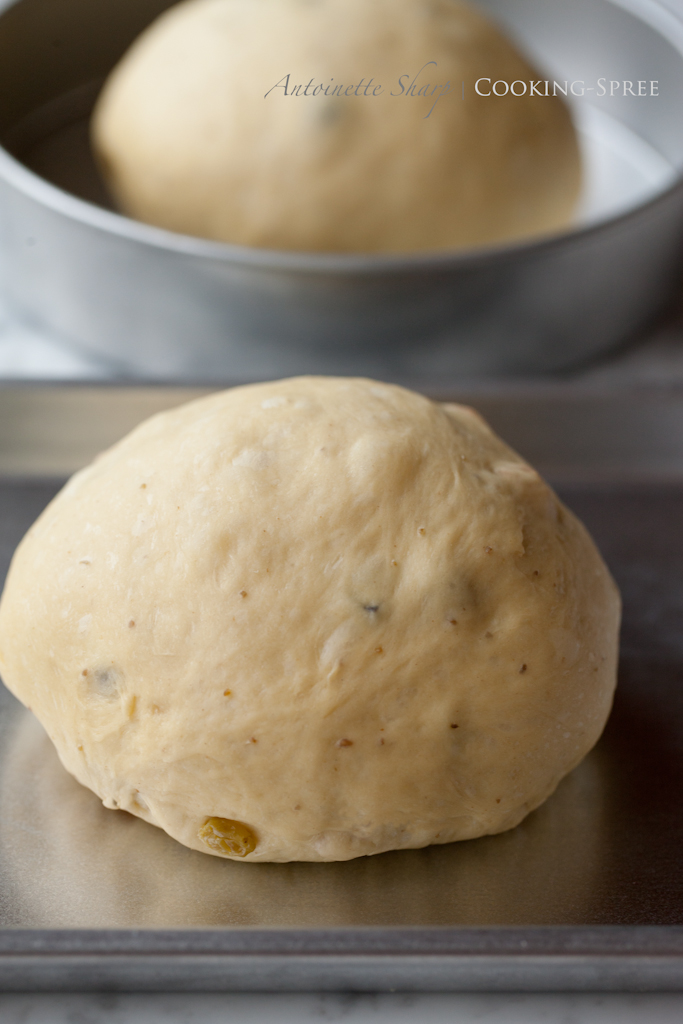
15 minutes before you expect the loaves to be ready for baking, place a rack 1/3 up from the bottom of the oven and preheat to 350°F. Brush the loaves gently with melted butter using a pastry brush.

Bake for approximately 45 minutes. If they begin to brown too much, lay a large paper grocery bag over the top toward the end. (Don’t worry, it won’t catch fire.) Or use aluminum foil if you’re leery.

Remove loaves from oven; cool completely on a rack before cutting. This bread keeps well for days, if wrapped tightly. Or bake ahead and freeze (double-bagged) for weeks or longer. Be sure to bring out before the holiday!
~ ~ ~

Tomorrow, continuing to be inspired by our travels to the southwest,

I’ll share yet another recipe with corn as the centerpiece

and some more photos from our trip.

ruthie’s ought-to-be-famous absolutely fabulous caramel corn

We visited a number of ruins while on our trip to Sedona, Arizona. We’ve been to each of them before, at least once, but each time we learn a little something new, and each time at various points, we’ll look over at each other and shake our heads in awe. It’s simply incredible – to walk amongst the stacked walls and scattered rocks where they had walked, farmed and hunted, prepared their food and ate their meals, had their babies, played and danced, wove from cotton they’d planted, carved tools from stone and bone, traded, worshipped…and then, around 1400 AD, they left…and no one can say to where, or why. It leaves us rather awestruck and feeling like we should whisper amongst these ruins. And we do.

Palatki ruins, Arizona

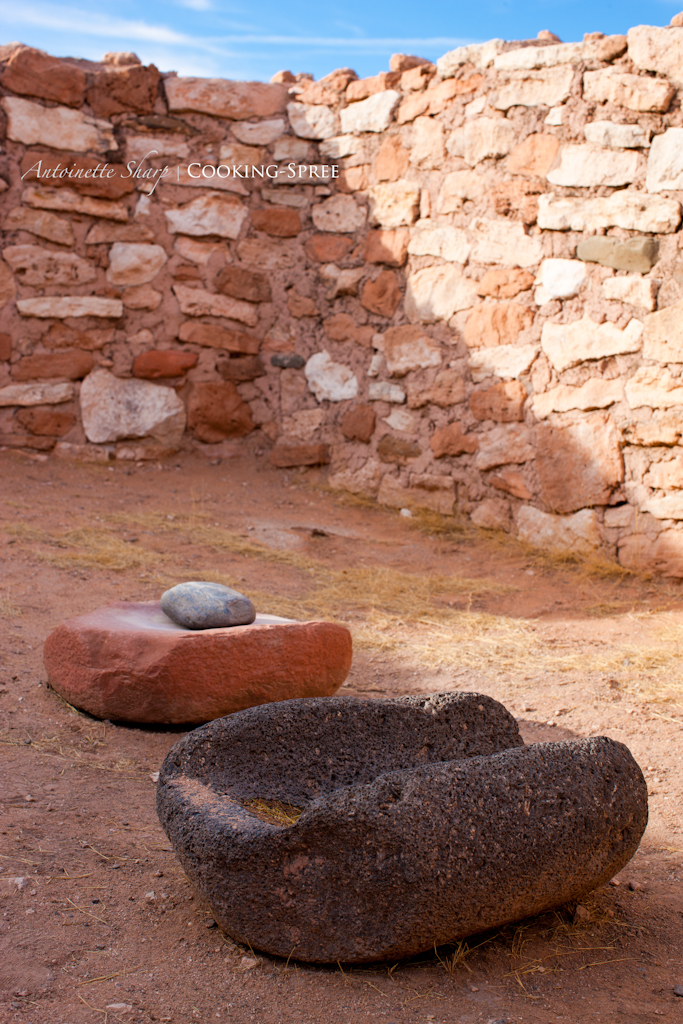
These are the curved stone tools (metates) in which the women (primarily) and children would grind their grains.

Metates

These people domesticated corn, digging irrigation ditches to bring water to their gardens, carving stone tools to hoe between the rows. Corn was absolutely central to these ancient Americans’ existence. With that on my mind, I turn my own attention to working with corn. But this is child’s play really, nothing serious about it. Well, just one. I’m not one prone to addiction, but this is one thing that comes seriously close to having me in its clutches. It’s my mother’s caramel corn and for years now it’s been showing up at our family Christmas. One or two or more of us will independently prepare it, pack in it tins or cellophane bags and gift one another with it. (We always hope we get one back.) It rarely lasts a day. I’m just sayin’…

Ruthie’s Ought-To-Be-Famous Absolutely Fabulous Caramel Corn

  • 6 quarts popped corn (i.e. 24 cups)
  • 2 cups light brown sugar
  • 1/2 cup light corn syrup
  • 1 cup unsalted butter
  • 1½ teaspoons salt (if using salted butter, reduce to 1 teaspoon)
  • ¼ teaspoon cream of tartar

to be added later:

  • ¼ teaspoon baking soda
Tools: Popcorn popper, candy thermometer, deep baking dish or roasting pan

Preheat oven to 250°F. Place popped corn into a large 4-inch-deep buttered baking pan or roasting pan. Keep popcorn warm in the oven as you prepare the caramel sauce.

In a large saucepan, combine brown sugar, corn syrup, butter, cream of tartar and salt. Measure out the baking soda and have it ready but don’t add at this time.

Bring to a boil over medium-high heat, stirring continuously. The caramel will begin to boil rapidly. Continue cooking and stirring until the bubbly mixture reaches 250° to 260° F as registered on a candy thermometer.

(For these next steps, you’ll want to act fairly quickly as caramel tends to harden before you know it.)

Remove the popcorn from the oven and have it on the counter nearby. Remove the pan from the stove. Add the baking soda to the caramel sauce, stirring quickly and thoroughly. (It will froth up and fill the pan and look like this.)

Read more

sun & snow in Sedona

We caught an early flight on a crisp, chilly Portland morning. Bound for Sedona, Arizona, where warm, weathered and ancient red rock rises into an almost unnaturally blue sky; where winter sun hurls long shadows over vast landscapes; where acres become miles of hay-pale grasses and scrub and cactus stained blue-grey-green. They grow clouds like mountains here, Everest-high, brilliant blooming white. This is a dramatic and stirring place. It can also be profoundly quiet. Peaceful. Ancient cultures have left enduring marks on cliff walls and, it would seem, in the rocks themselves. In the silence, you feel them here. There is a wildness, an untamable beauty, a largeness of scale that puts us humans in our place. It feels so good to come down to our true size. You can do that here and never feel less for it.

We arrived in Phoenix and drove 2 hours north to Sedona, elevation between 4,000 and 5,000 feet. (Hikes will take you higher still.) Soon after arriving, the snow began to fall. Beautiful! This trip was going to be cold, very cold. But we were ready for it.

We received great news when we checked in!

We were to have an outdoor, open-to-the-stars shower!

One and a half feet in…

…then out.

(Indoor plumbing came with the package too.)

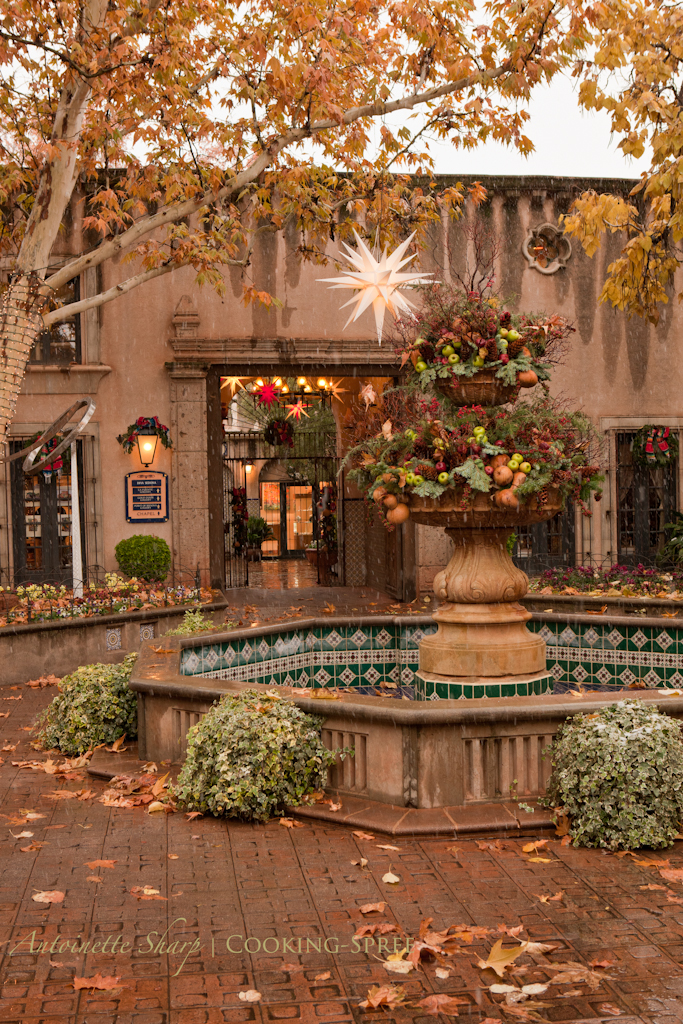
First couple days we stayed close to “home,” wandering the little town streets, the completely charming arts and crafts market Tlaquepaque, slipping into galleries and shops to thaw our noses.

I’m sure you’ve guessed – we’ve also eaten very well. A little too well and less exercise than we’re used to. We’ll pay for this.

Food-wise, the highlight has been the Sunday brunch at the place where we’re staying. I’m not always a huge fan of brunches. This was phenomenal. The setting was beautiful, overlooking a tree-rimmed creek, the sun shining through our southern facing windows so warm now they were rolled open. Creek rushing, ducks quacking, gentle breeze lifting the curtains, and the most extensive, gorgeous array of foods to fill our plates with.

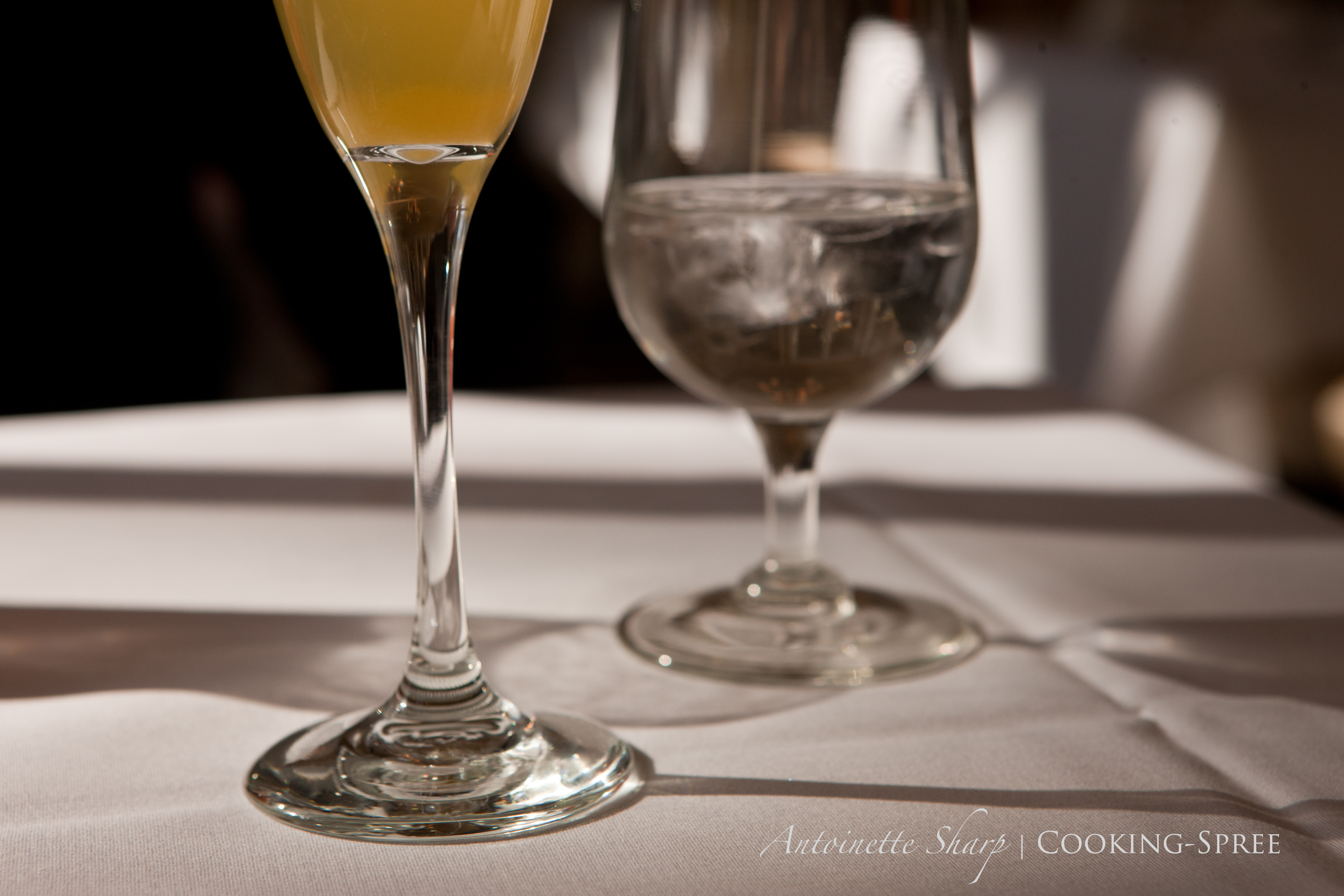
Mimosas and plenty of water.

I’ll detail later what these good people fed us, but several of the salads were so delicious and out-of-the-ordinary, that you can expect to see some recreations posted here.

~ ~ ~

We walked around the snowy town in mittens and hiking boots. Too cold to be out for long. The eyes wanted so badly to linger.

~ ~ ~

The next day temperatures warmed a bit and we headed for the river and the red rock and the falling sun…

Read more

taking flight

As this post flies out the door, so do we. Six days of sun (and snow!) in Sedona, Arizona. I’ll be posting from the road, but I’m not sure exactly what that will look like. (I love surprises!) There will be only one recipe between now and the time we return, but lots of images and a word or two here and there.

See you soon!

Spree

chai for two, & two for chai

We read the other day that locally-based Tazo Teas will be pulling up stakes and leaving Portland for a colder and damper clime. (I know, you thought that not possible. Portland gets such a bad rap.)  We’ll still be able to buy their teas of course, but we’ll be sorry to see them go. Having Tazo in our backyard is a bit like a blanket thrown over the back of the couch, or a delicious book on the nightstand – a bit of a comfort –  there, should you need it. The building that houses Tazo is striking in its simplicity, spare in its details, but rich, warm and inviting. Is there something subliminal in its design that makes one suddenly crave a steaming fragrant cup of tea? Wait here, I’ve got just the ticket!

I’m not claiming to be an expert, not by any stretch, but I did learn from one. My friend Amit from Delhi taught me how chai was made in their kitchen back home and I’ve been making it in ours ever since. It’s very simple to do and I predict you’ll never go back to those cartons of chai after tasting this one. Take ten minutes of your time before you sit down to address your holiday cards, or wrap your gifts, or pay your bills. If your attitude is running a bit sour, you might try chai. A hug around your heart, held in a steamy pot. (I know. Ridiculous you say. But only because you haven’t tried it yet.)

For those who’ve never enjoyed the treat that chai is – imagine steaming milk (cow’s milk, soy, rice, coconut – whatever your preference) – into it fragrant cardamom, allspice, freshly ground pepper and grated fresh ginger root – allow it all to steep so that the milk itself is imbued with all the fragrance and warmth these spices impart – then the tea (black or green or a combination of the two) for the last 3 minutes. Strain and serve. Warm your hands, warm your soul.

(And though I’ve strongly advocated for your chai to be served steaming hot, I can tell you that over ice in the summer, it’s refreshingly delicious and wonderful!)

Chai for Two

  • 2 cups milk (I’ll use any milk, but for chai I think soy might be my personal favorite.)
  • 2/3 cup water
  • 1/2 teaspoon ground cardamom
  • 1 teaspoon ground allspice
  • 1/4 teaspoon freshly ground pepper
  • 2 teaspoons to 1 tablespoon freshly grated ginger root (see NOTE)
  • sugar to taste (see NOTE)
  • 2 teaspoons tea (see NOTE)

Directions:

Into a medium saucepan, over low heat measure the milk of your choice and water. Add allspice, cardamom, freshly-ground pepper. Grate the ginger, measure and add. Bring the pot slowly to just steaming, stirring frequently. (Don’t allow soy, rice or coconut milk to boil as it will separate which is never pretty.) Turn heat to lowest setting or turn off entirely. Spill the tea(s) over the steaming milk. Stir once then leave undisturbed for 3 minutes. (After 3 minutes, the bitterness of the tea leaf begins to leach into your brew.)

Using a fine mesh strainer, strain the chai of its solids.

This will cool it off some, so return to the pot and gently rewarm. (Again, careful not to boil.)

~ ~ ~

Serve steaming. Or chill, and serve over ice.

See below for NOTES on Ginger, Sugar and Tea. Read more